Lined or unlined? What to check before choosing a dress or skirt
A dress can look simple from the front and feel quite different once you put it on. The layer underneath may finish well above the outer hem, sit close around the hips or belong only to the bodice. The word 'lined' leaves all of those possibilities open.
Start with where and how you expect to wear the piece. Daylight, a seated lunch and a walk to the station can reveal different things from a still photograph. Reading the lining information alongside the outer fabric helps you ask more useful questions before ordering.
Sources:Current WeftKind product photographs and reviewed garment-label records, including separate main-fabric and lining composition for the featured floral dress.
Find out which parts are lined
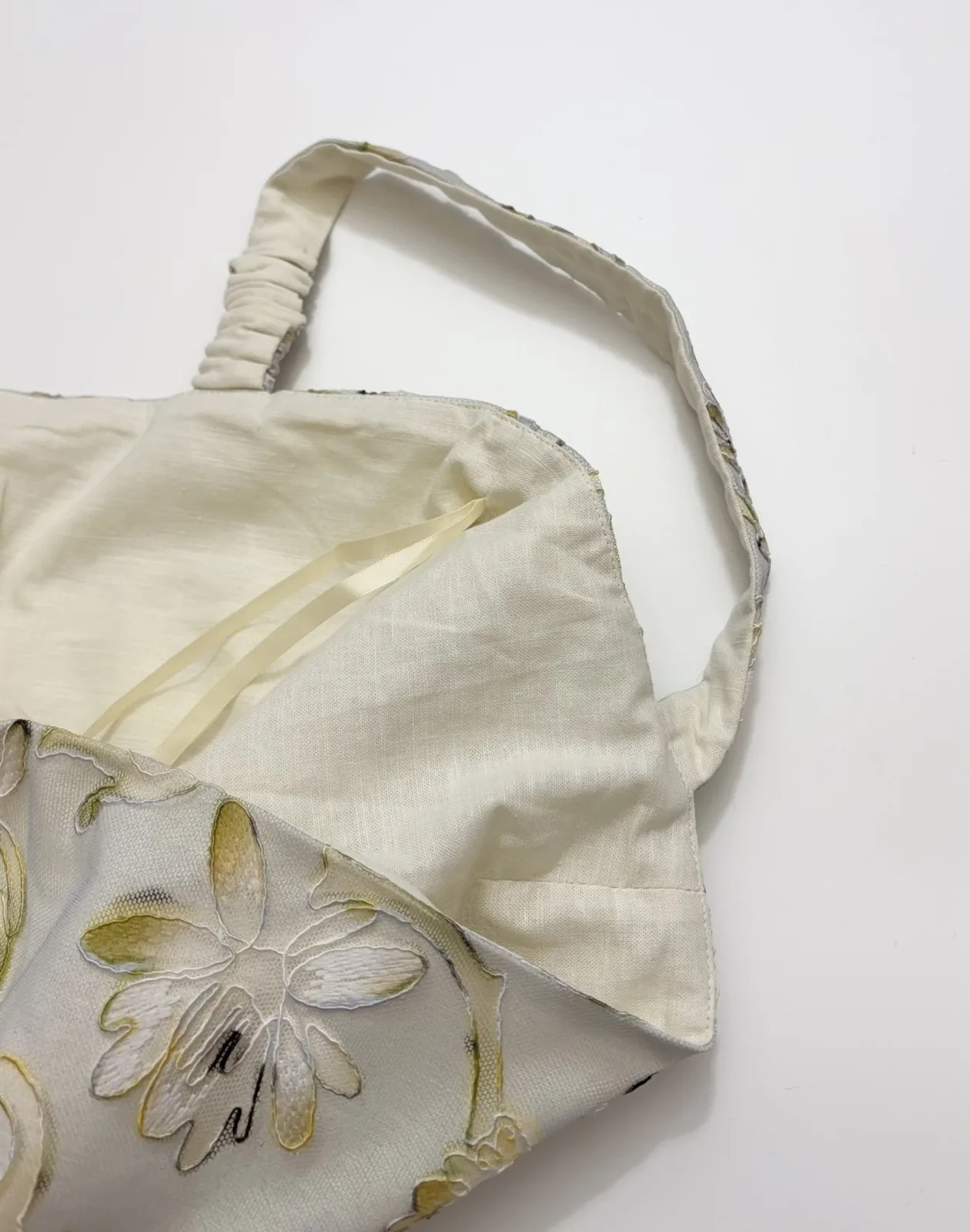
Look for a full interior view or an explicit description. Is the bodice lined? Does the skirt have a separate layer, and where does it end? Sleeves, lace panels and openwork sections may be treated differently from the main body. A separate slip is also different from a lining attached to the garment.
If the page only says 'lined', ask about the areas that matter to you. For a dress with a decorative outer hem, the shorter inner layer may be intentional. Check that the resulting coverage suits the occasion rather than assuming the two hems should meet.
Read the outer and inner composition separately
A material named in a product title may refer to the outer fabric, a lining or only one panel. Find the component names next to the percentages and keep them separate. Do not turn the presence of a familiar fibre in the lining into a claim about the entire dress.
If exact composition has not been confirmed, request the label. The same principle applies to care: read the instructions for the finished garment instead of assigning one method to the outer fabric and another to the inside.
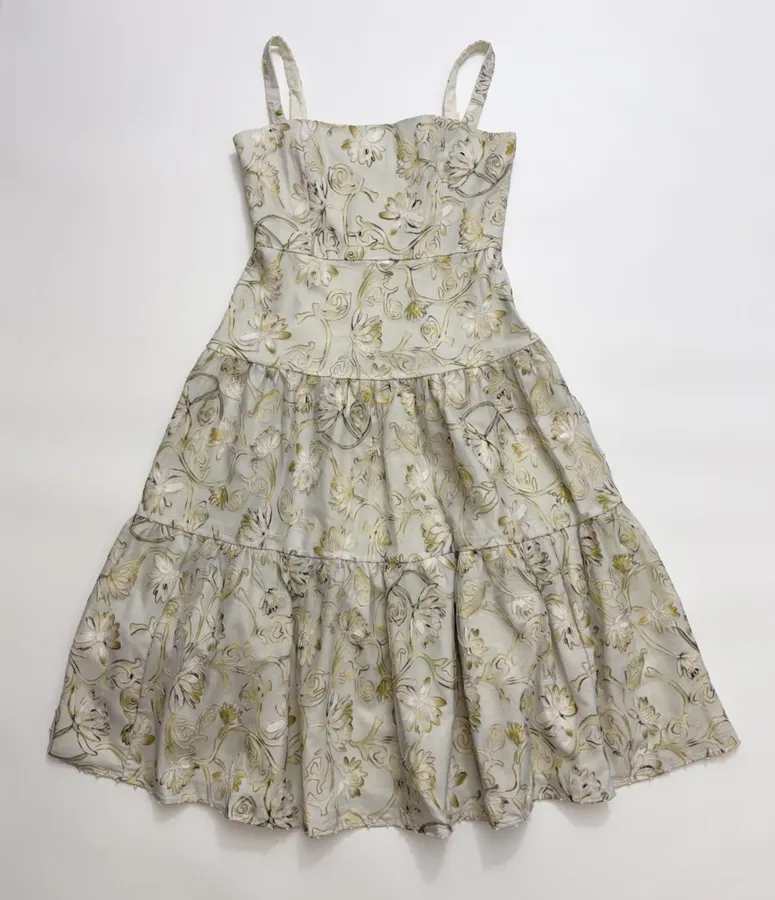
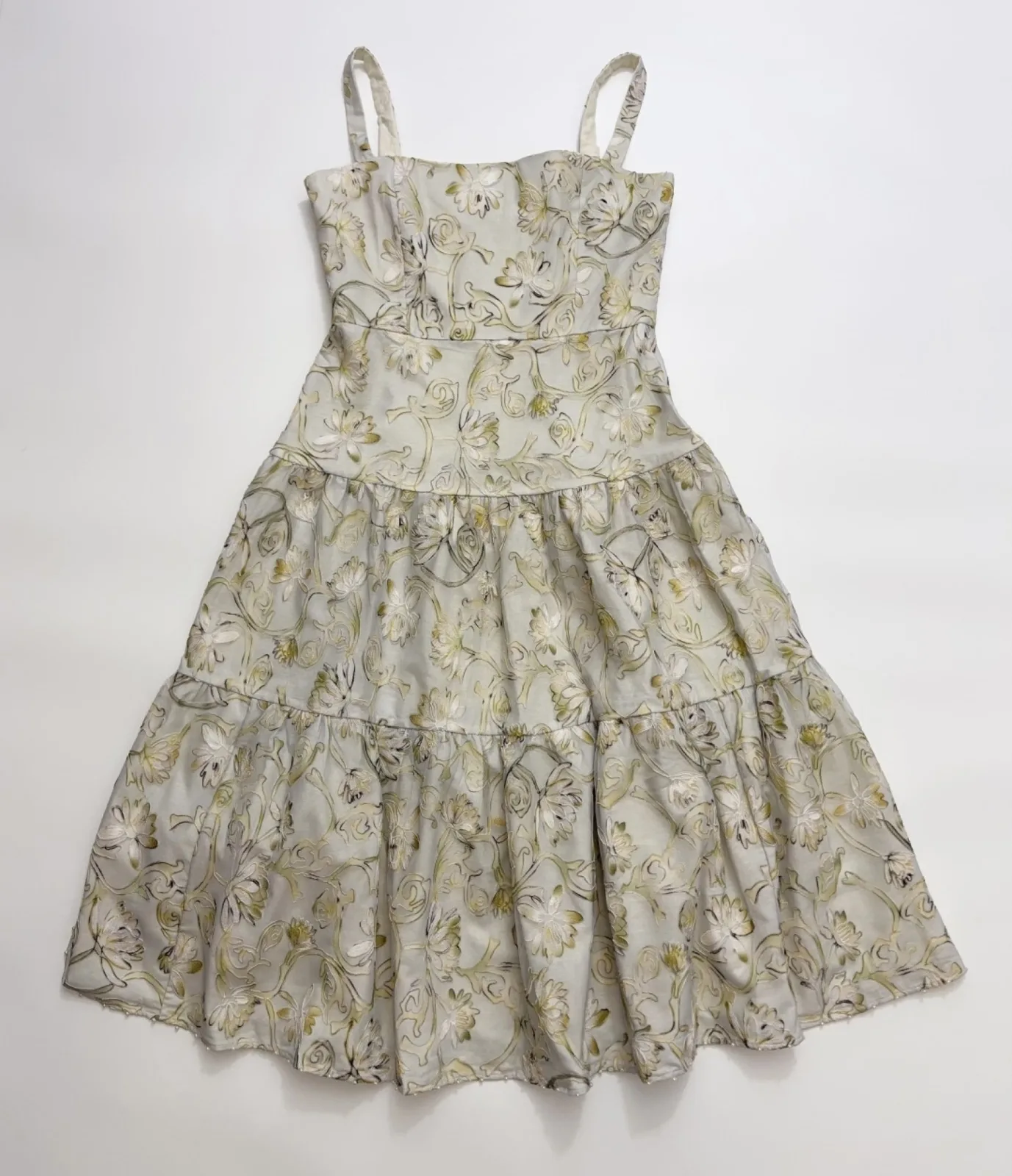
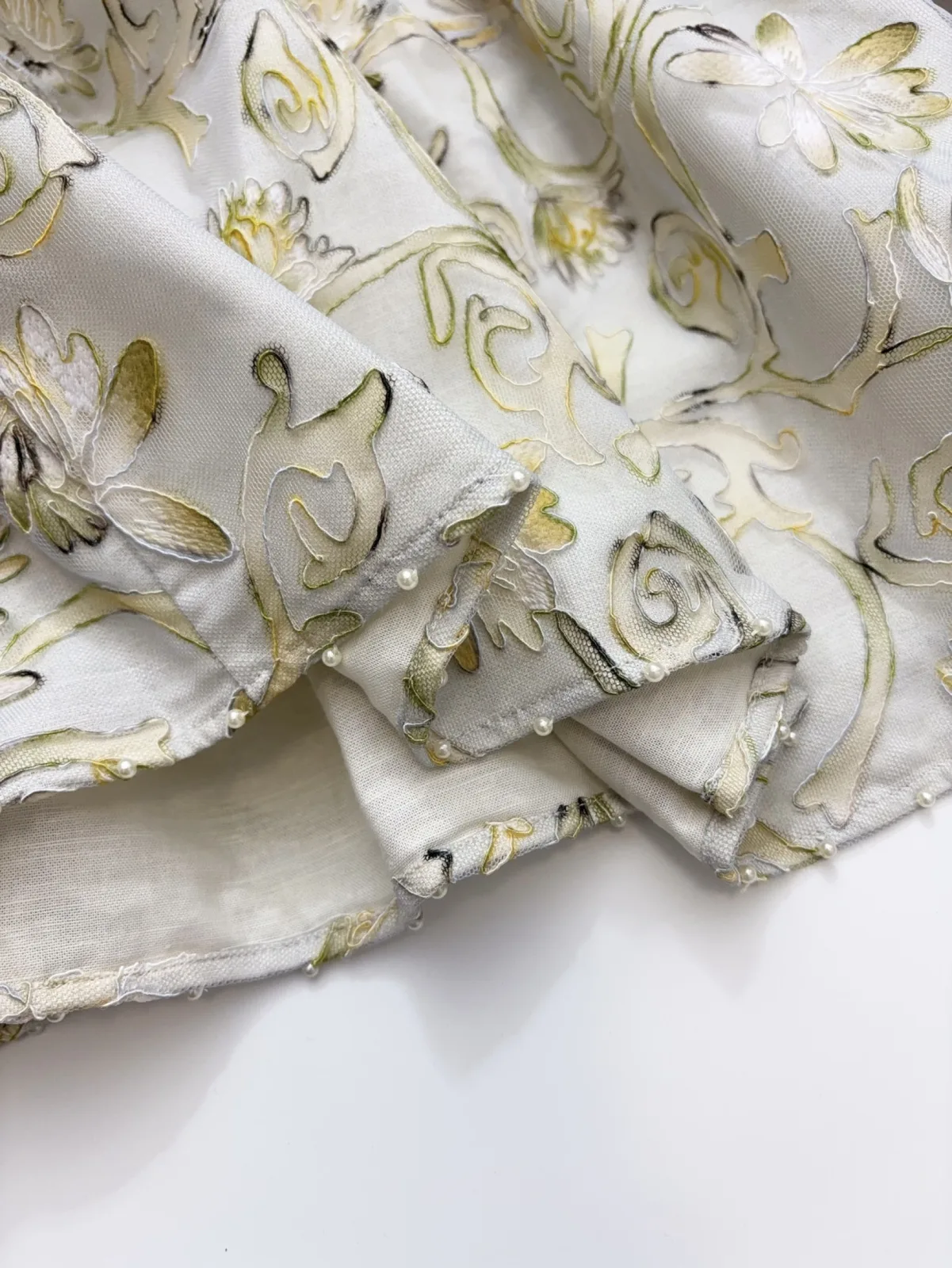
For the floral midi dress pictured here, the reviewed label lists main fabric as 100% polyester and lining as 100% linen. That record confirms component composition. The length and fit of the inner layer still need photographs and a try-on.
Look at the fall, then check the space inside
Study the front, side and back photographs together. Notice whether the outer skirt falls freely or holds a particular shape. An image of the inside helps explain what sits beneath it, but neither view alone tells you exactly how it will feel on your body.
When trying the garment, sit and take a few ordinary steps. Notice whether the inner layer rides up, pulls across the seat or feels shorter than you expected. A generous outer skirt can still have a closer-fitting lining, so check both layers before deciding whether a size works.
Treat coverage as a question to verify
A lining is useful information, but its presence does not promise opacity under every light. Look for photographs that show the garment clearly, and ask for another view if coverage is important to your choice. Dark studio backgrounds can make this hard to judge.
At home, try the piece with the underlayers you intend to wear and look in ordinary daylight without exposing yourself in public. Move as well as stand. If you prefer a separate slip with an unlined dress, check that its neckline and hem remain where you want them.
Choose for your actual day
An unlined garment is not automatically unfinished, and a lined one is not automatically the better purchase. Your preference may depend on the look you want, the amount of coverage you need and the care routine you are willing to follow.
Before ordering, make a short note: which areas are lined, the length of that layer, the disclosed composition and any unanswered fit questions. Bring those details together with the garment measurements. That gives you a more useful comparison than choosing by one word on a product page.