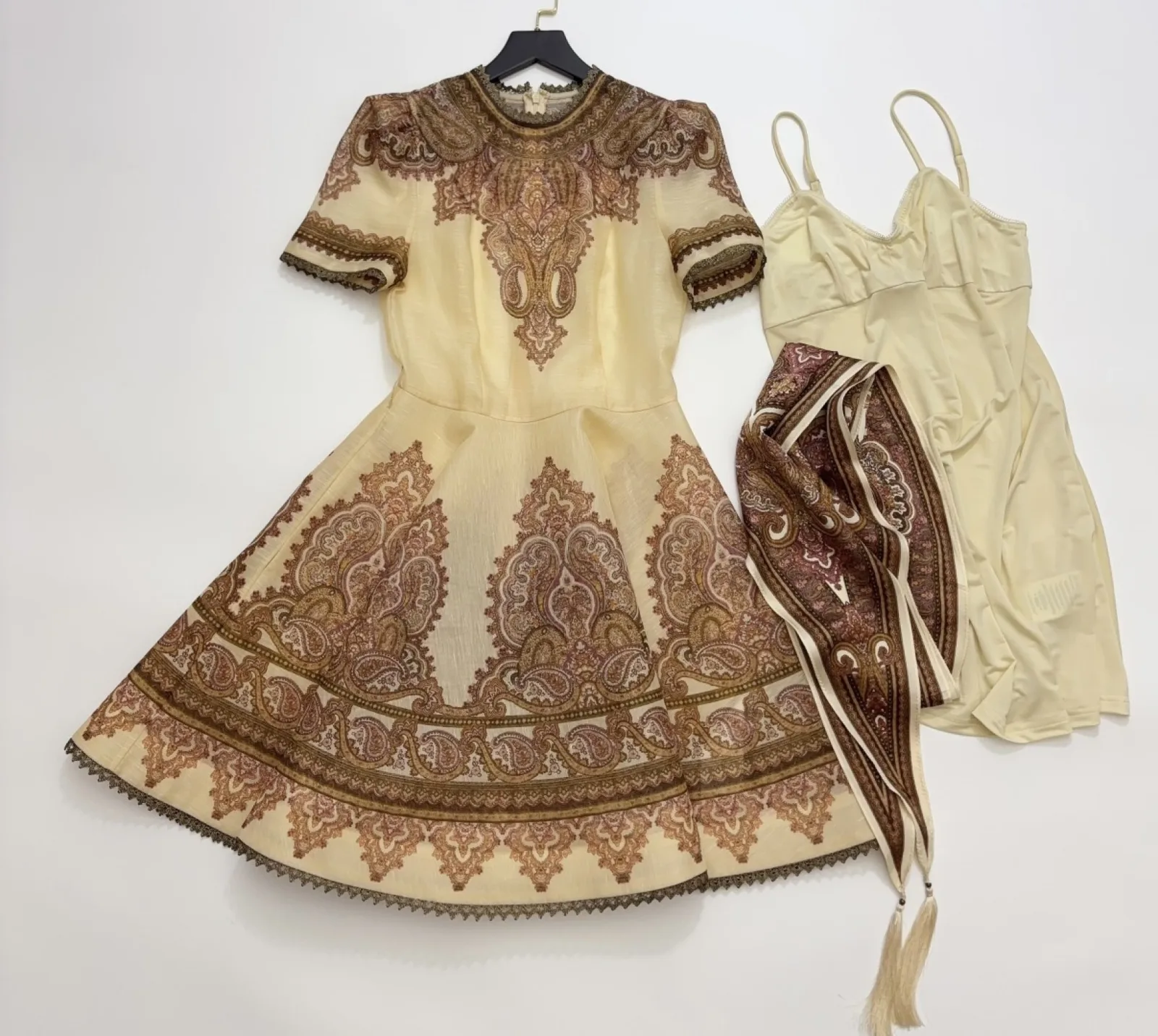
How to choose dress length online without relying on mini, midi or maxi
Mini, midi and maxi are useful shopping filters, but they do not promise an exact hem position. The same listed length lands differently depending on height, torso length, shoulder shape and where the dress is designed to sit. An uneven hem or adjustable strap changes the result again.
To estimate length online, use a dress you already own as a physical reference. Choose one with a similar neckline and waist construction, then compare measurements from the same starting point.
Use a measurement, not the category name
Read how the seller measures garment length. It may run from the shoulder beside the neck, from the centre back or from the top of a strap. A strapless dress needs another reference point. If the chart does not show the method, ask before comparing the number with your own dress.
Lay the reference dress flat and let it settle naturally. Measure from the corresponding point to the hem without stretching the fabric. For a curved, dipped or asymmetrical hem, record the shortest and longest points. This gives a useful range instead of pretending that one number describes the whole edge.
Check the waist seam and torso length
The waist position can change how long a dress appears. A seam intended to sit at the natural waist may land on the ribs or below the waist when the torso length differs. That changes both the bodice fit and the amount of skirt hanging below it.
On your reference dress, measure from the shoulder or neckline point to the waist seam as well as the full length. Look at side photographs to see whether the seam is level, raised at the front or deliberately dropped. For a fitted bodice, compare chest and waist measurements too; a dress that cannot settle into its intended position may finish higher than expected.
Include straps, sleeves and neckline in the estimate
Adjustable straps can move the entire dress up or down, but only within the range that keeps the neckline and armholes comfortable. Shortening straps to raise a hem can make the armhole tight or place the neckline too high. With fixed straps or sleeves, shoulder fit has a stronger effect on where the garment hangs.
If the product page gives strap length, compare it separately. For a halter or tie shoulder, check whether the length is adjustable and whether the product measurement was taken before or after tying. A close front photograph helps, but it does not replace these details.
Picture the hem with the shoes and movement you expect
Try the reference dress with the shoes you plan to wear. A maxi hem that clears the floor in heels may touch it in flats. A midi hem can meet the widest part of the calf or finish above it depending on a small change in length. There is no universal best point; check the view and movement that suit the occasion.
Walk, sit and use stairs. Look for a back slit, side slit, lining or a fuller skirt that changes the available stride. A sheer outer layer may be longer than its lining, so read both measurements if they are provided. For an event dress, test the coat or jacket as well, because the layers can catch at different hems.
Make a short note before ordering
Write down four things: where the product length begins, the total length or range, the bodice-to-waist distance and the shoes used for comparison. Add the model's height only as supporting context; proportions and the worn size still affect the photograph.
If one measurement is missing, ask for it directly. A specific question such as “What is the shoulder-to-waist measurement in size M?” is more useful than asking whether a dress will be midi on you. When the dress arrives, keep the tags on while you check the neckline, waist, hem and normal movement together.