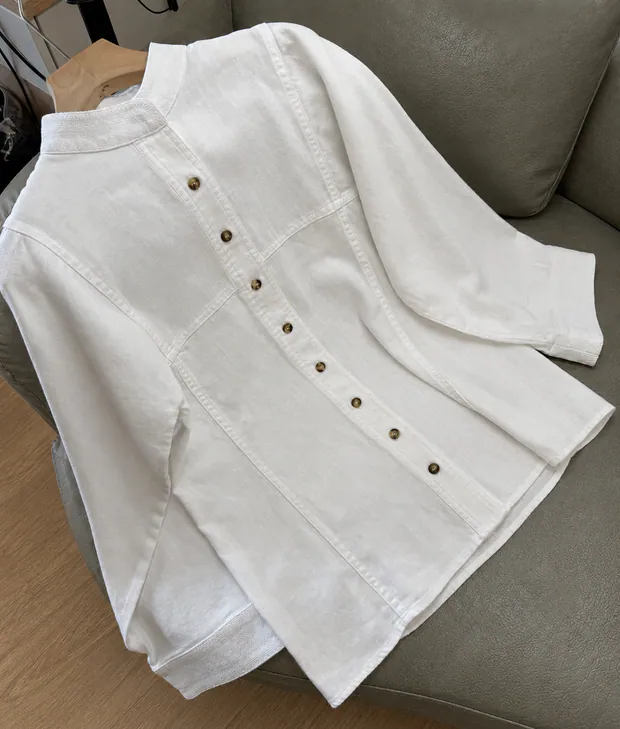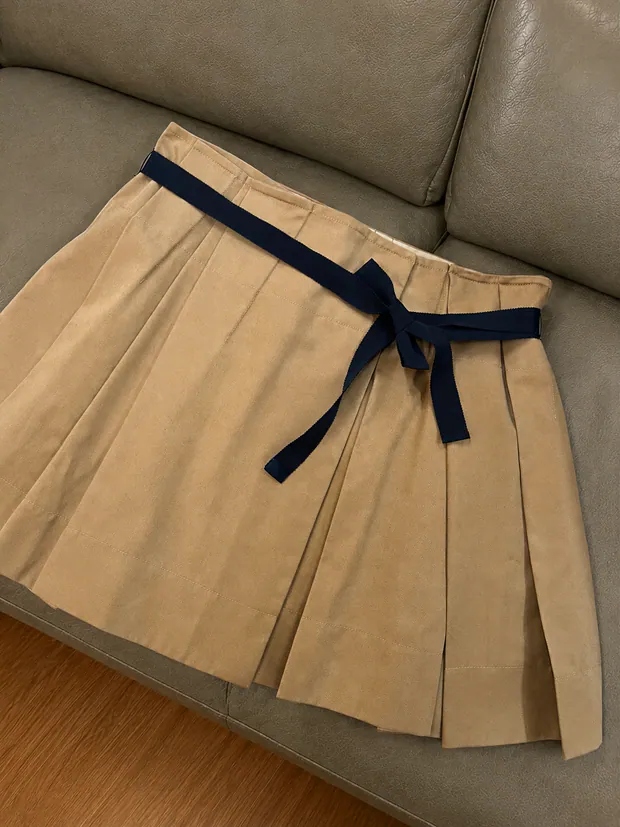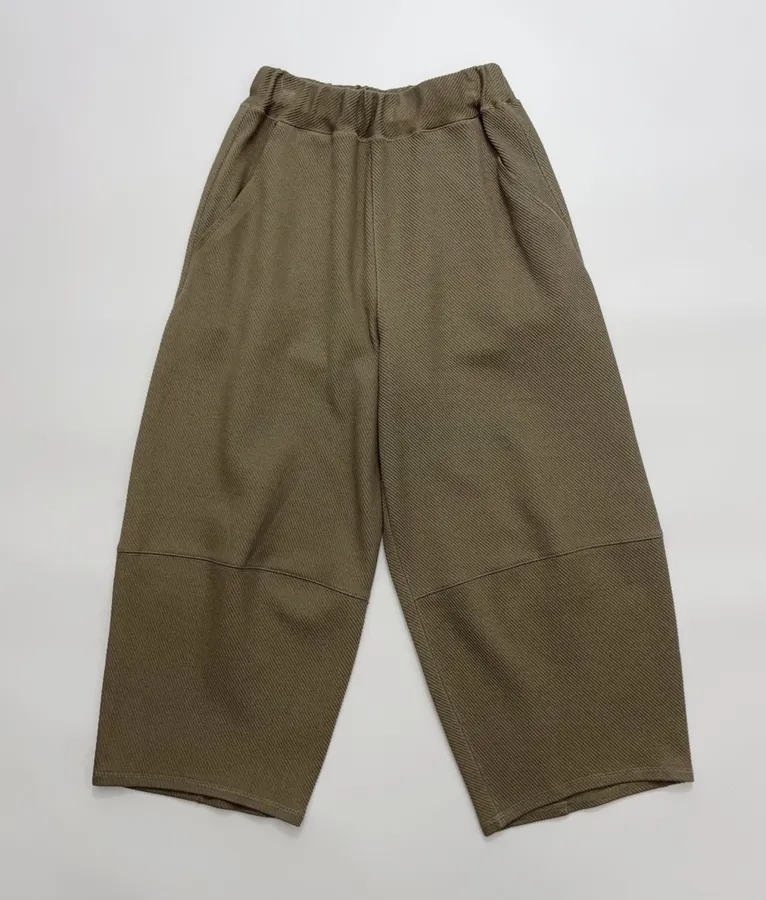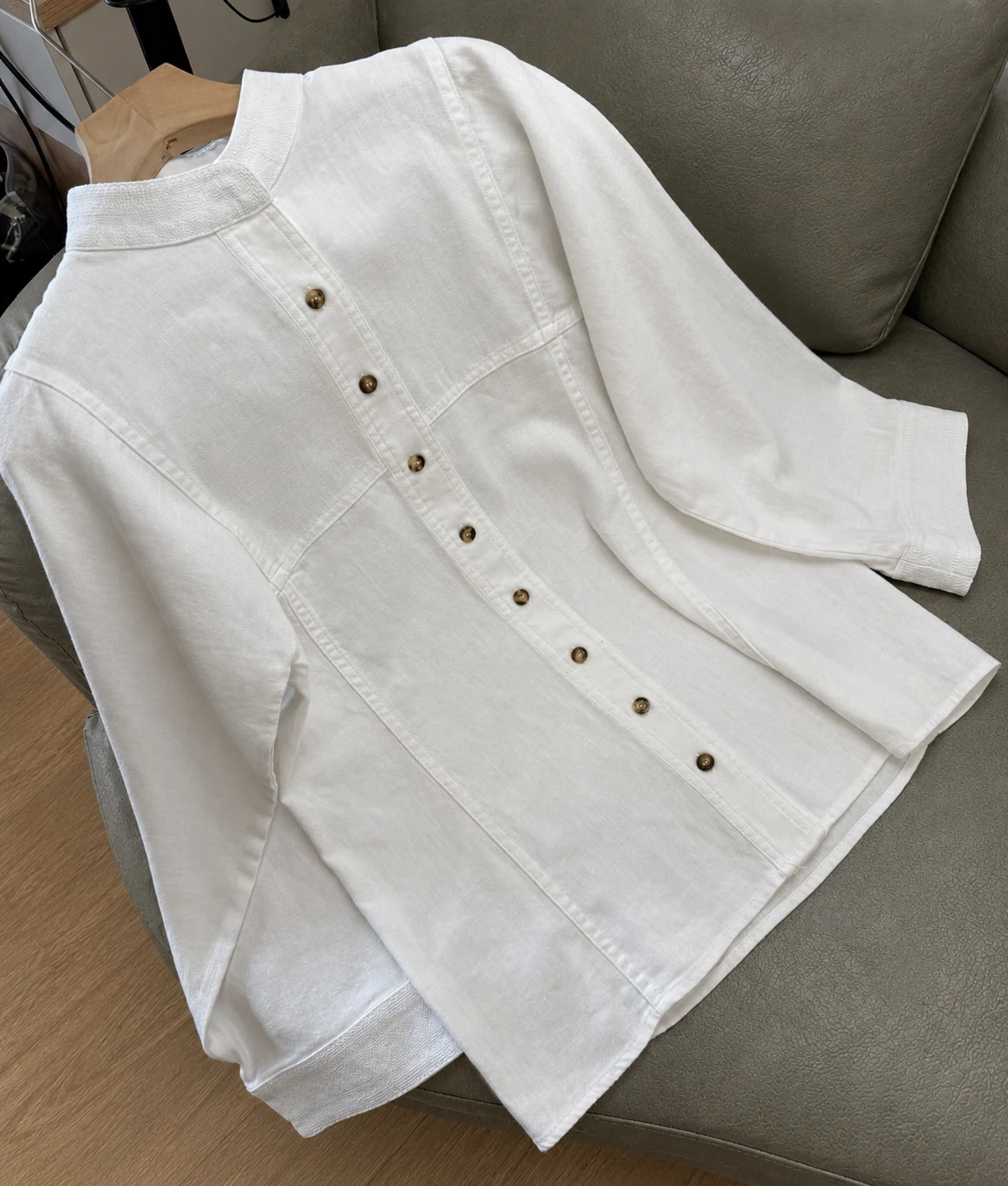
One plain shirt, three ways to wear it
A plain shirt is often the piece left hanging while you decide what the outfit needs. It can be the starting point instead. Put it beside trousers and a skirt you already wear, and try changing only the way the front and hem sit.
These three approaches do not require a new set of clothes. Use the shirt's actual cut, length and fastenings as your guide. A neat stand collar and a broad turn-down collar will frame the same outfit differently, and a straight hem behaves differently from a long curved one.
Sources:Styling observations based on current WeftKind shirt and outfit photographs.
Buttoned, with a little room at the neckline
Start with the shirt buttoned and the hem left out. Look at where it finishes against the waistband and the widest part of the lower garment. Try it with straight or wide trousers, then with a skirt. You may prefer a clean uninterrupted line in one outfit and a visible waist in the other.
Adjust the collar while standing naturally. Undo only the buttons you are comfortable leaving open and check the view when you lean forward. Fasten the cuffs first, then try a simple turn if the sleeve construction allows it. A tidy cuff changes the amount of fabric around your hands without adding another accessory.
Open, over a base you are happy to show
Wear the shirt open over a plain vest or camisole that works on its own. Check the two necklines together. With the shirt moving as you walk, more of the base layer may show than it does in a mirror photograph.
Leave enough room in the shoulders and upper sleeves for both pieces. Reach forward and sit down before deciding the combination feels easy. Keep the underlayer relatively simple if the shirt has a noticeable collar or pockets. Try a bag you normally carry and see whether it catches the open front or pushes one side out of place.
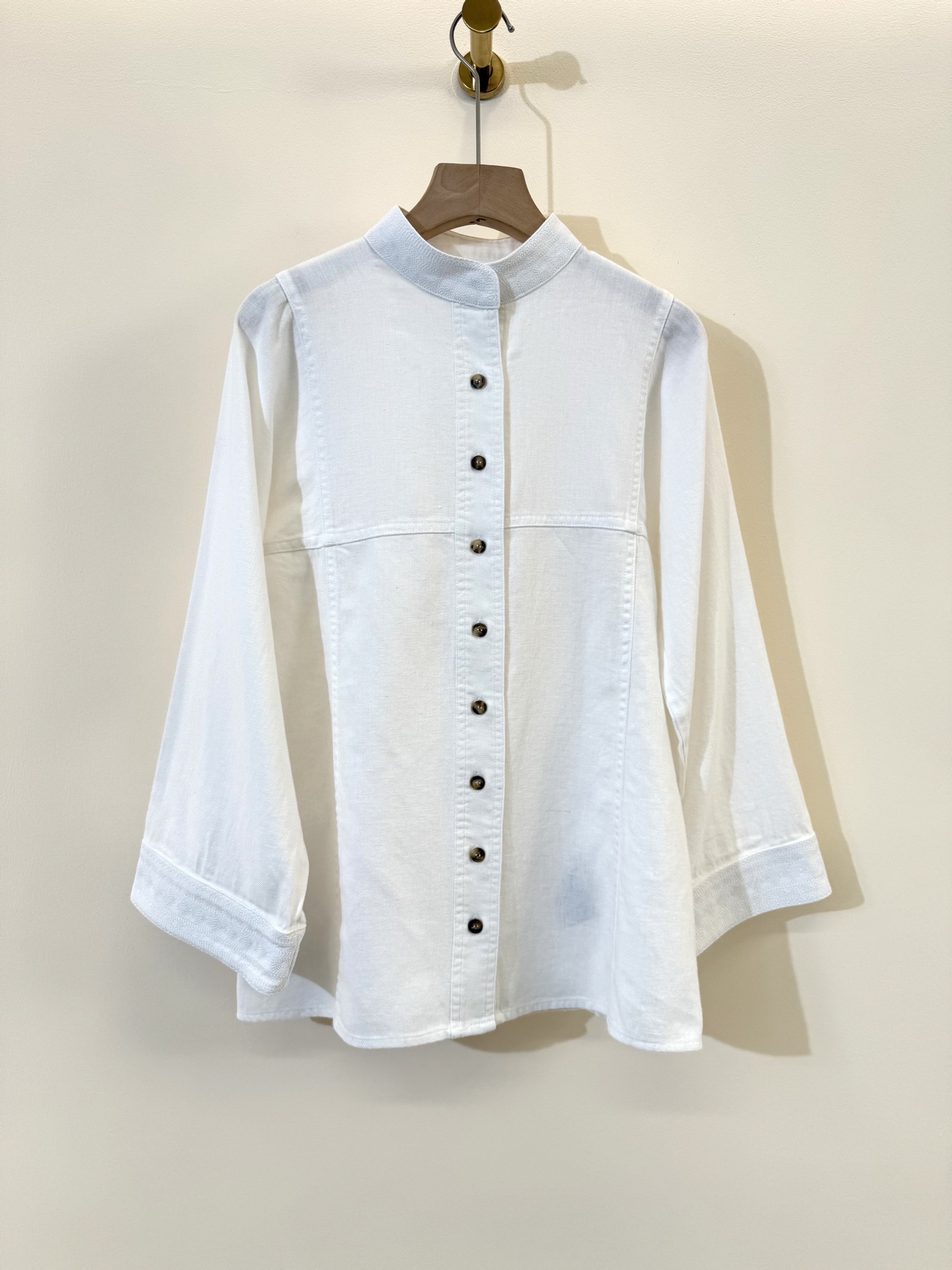
Tucked, with the waistband doing some of the work
For a full tuck, arrange the shirt evenly around the waistband, then raise your arms and let it settle. Pull out only the amount of fabric you want. If a long shirt creates a bulky roll underneath, try a smaller front tuck or leave it out instead of forcing the fabric flat.
A partial tuck is an option rather than a requirement. Try it with the trousers or skirt you plan to wear, and look at both the side and back. With a pleated skirt, notice how the waistband sits and whether the pleats fall as intended. A comfortable tuck should survive sitting down and standing up again.
Finish the outfit with what is already by the door
Use your usual shoes to judge the balance. The same shirt and trousers can feel different when the trouser hem meets a flat shoe or a boot. If you change a bag or add a belt, check the result before adding anything else. It is easier to see which detail made the difference.
Take a quick photograph of the version you would actually leave home in. Note whether the sleeves stayed comfortable and the hem needed adjusting. Next time, you have a useful starting point: the shirt you own, the lower garment that works with it and one way of wearing them that has already passed an ordinary day.