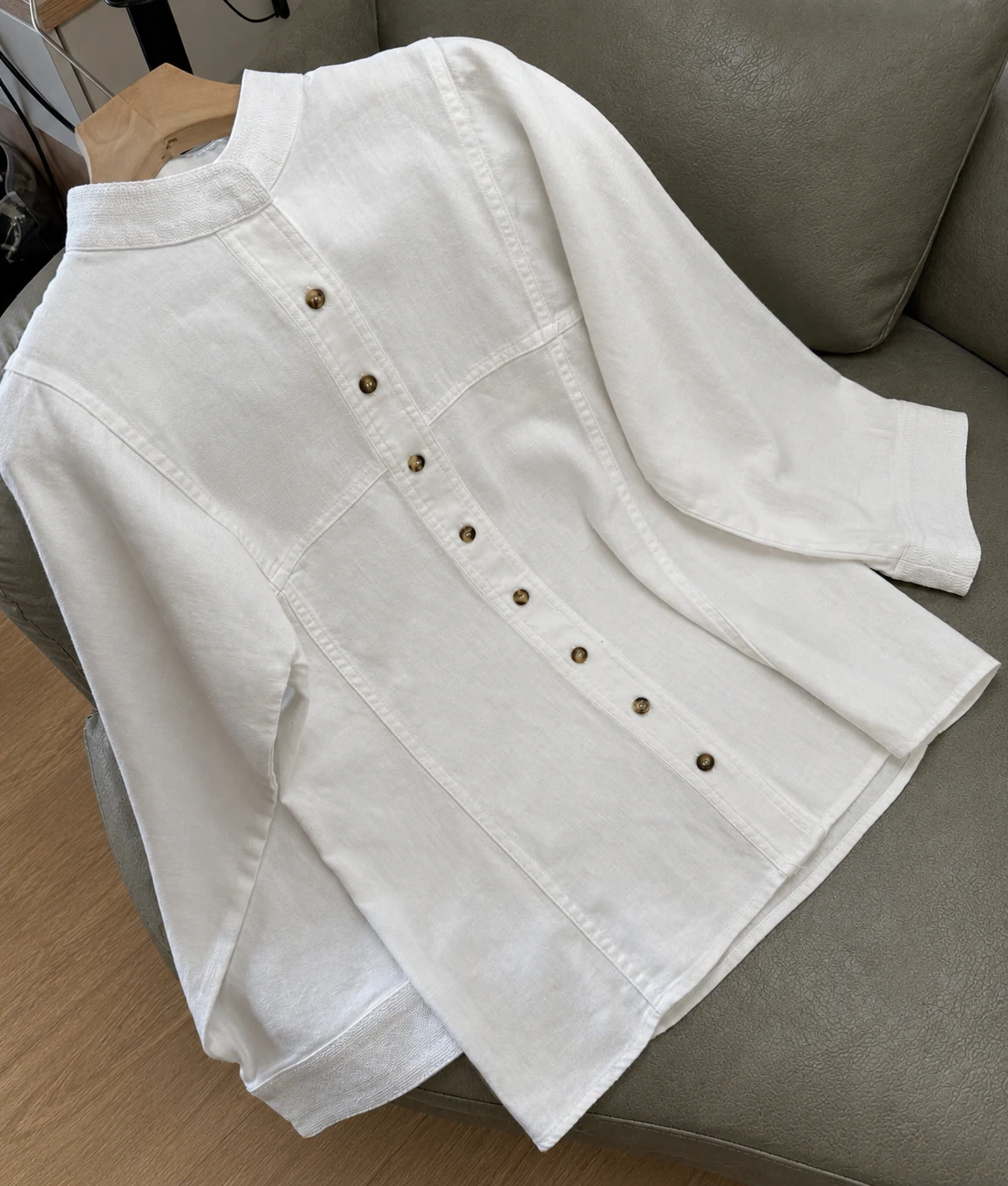
How to layer a shirt under knitwear without bunching
A shirt under a sweater or cardigan looks simple until the collar shifts, the sleeves twist or the hem gathers at the waist. Most of those problems come from the relationship between two garments, not from either piece on its own.
Choose the pair together. The shirt provides the base shape; the knit needs enough room to slide over it and a neckline that lets the collar sit where you want it.
Begin with a shirt that works as the base layer
A smooth, lighter shirt is easier to layer than a stiff or heavily gathered one, but that does not mean every base must be fitted. Use the amount of ease you need to sit, reach and button the shirt comfortably. Excess fabric at the side seams or back will still have to go somewhere under the knit.
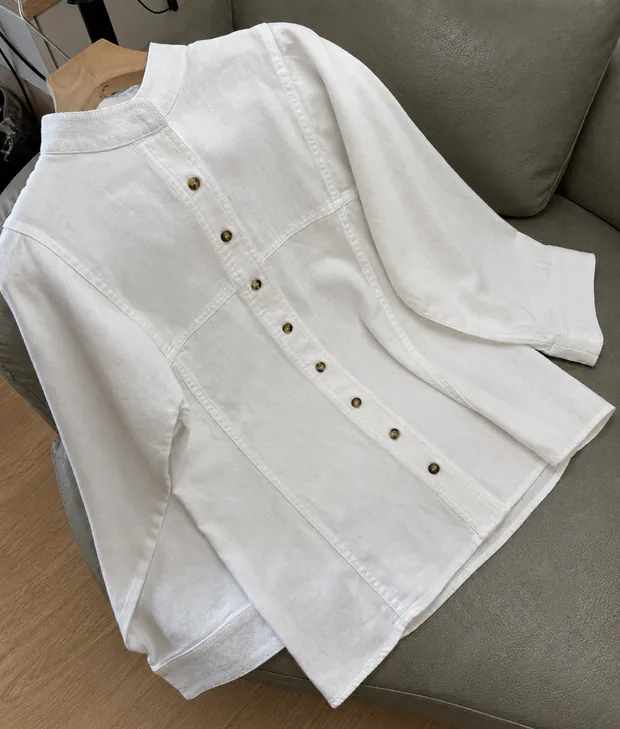
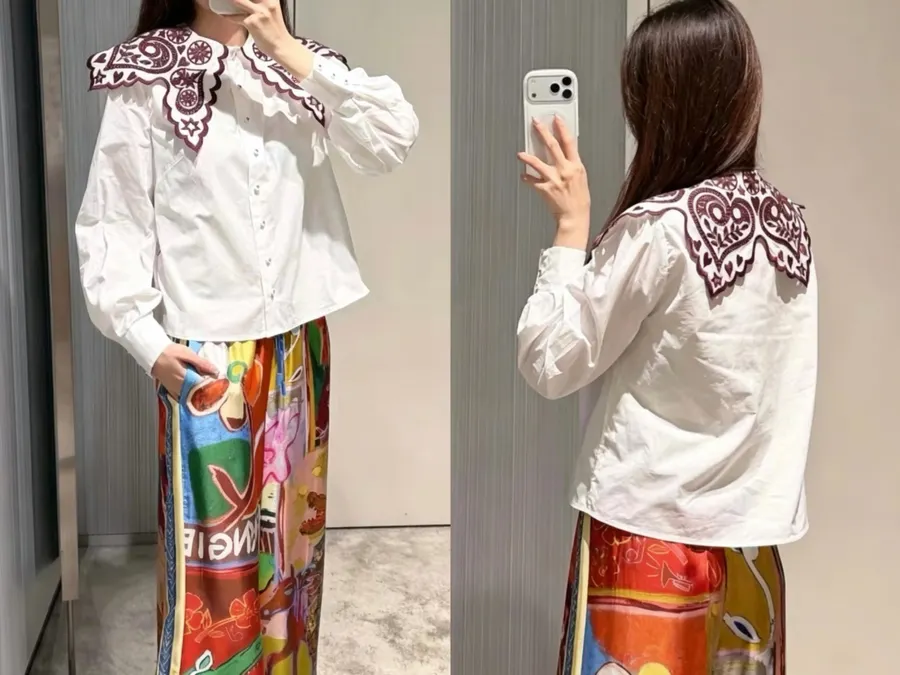
Button the shirt and tuck it in or leave it out exactly as you plan to wear it. Smooth the back yoke and sleeves before adding the next layer. If the shirt has puffed sleeves, large cuffs, embroidery or a long curved hem, decide whether those features should show or remain fully underneath.
Match the two necklines
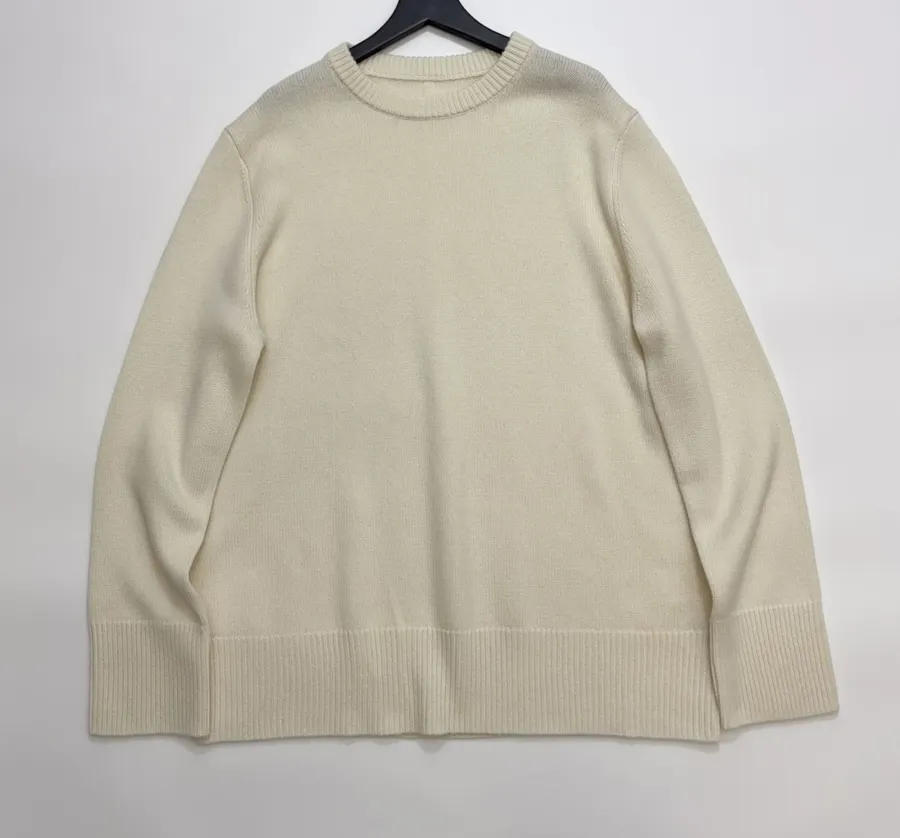
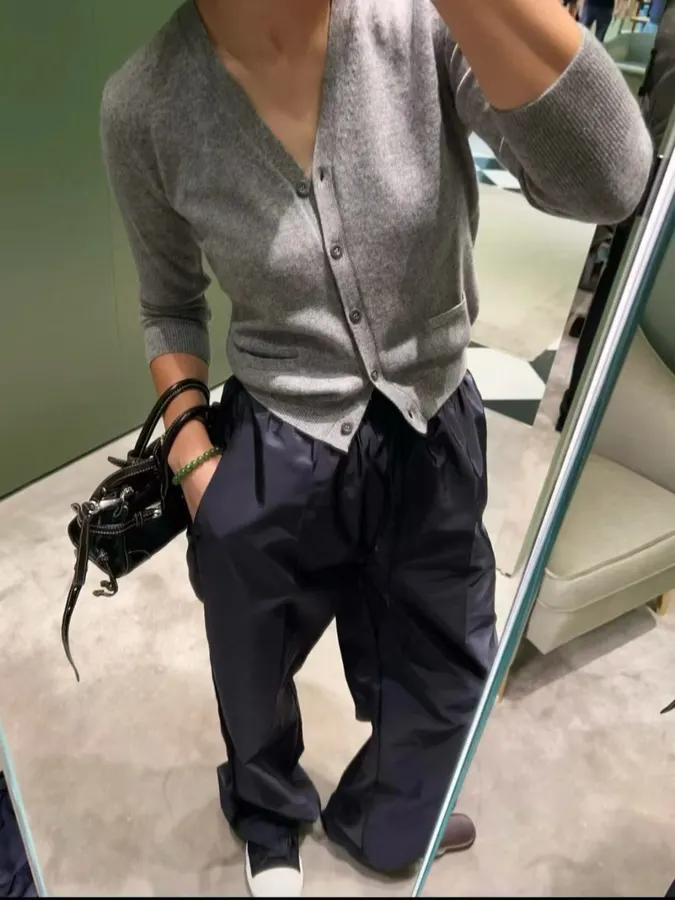
A crew-neck sweater frames a small shirt collar closely. A V-neck leaves more of the placket visible, while a cardigan can be opened to control the amount. A mandarin collar needs enough space to stand without being pressed flat or pushed against the neck.
Put the knit on, then reset the collar by hand. If it repeatedly disappears, rolls or lifts at one side, check the neckline width and the bulk of the collar seam. Pulling the collar farther out rarely fixes a mismatch for long. A deliberate tucked-in collar can also look clean when the two shapes do not sit well together.
Keep sleeve layers from twisting
Hold the shirt cuff while sliding each arm into the knit. This keeps the shirt sleeve from riding up toward the elbow. Once both layers are on, bend the arm and smooth the fabric from the upper arm downward rather than tugging only at the cuff.
Check upper-arm and armhole room. A knit that fits comfortably over a T-shirt may feel tight over a woven sleeve. If the outer sleeve twists or forms hard diagonal pulls, compare the sleeve width and armhole shape. Going up a size can help in some cases, but it may also move the shoulder and lengthen the sleeve, so check the full garment.
Decide what the hem should do
For a visible shirt tail, compare the lengths before dressing. A small, even section below the knit looks different from a long curved hem at the back. If the sweater has a tight ribbed band, it may catch the shirt and create a shelf of fabric. A split or straighter knit hem usually lets the lower layer move more freely.
When both pieces are tucked in, the combined fabric can feel thick at the waistband. Try a partial tuck or choose a finer base layer if that bulk bothers you. Sit down after arranging the hem; a combination that looks neat while standing can pull out or bunch as soon as the torso bends.
Test the pair as one outfit
Raise your arms, reach forward and put on the coat you would wear above the layers. Make sure the shirt still buttons comfortably, the knit does not catch at the shoulder and three layers do not restrict the elbow. Carry your usual bag as straps can shift a loose collar or open cardigan.
When shopping online, compare the knit's chest and upper-arm measurements with a knit you already wear over shirts. Save the shirt and knit measurements as a pair. That gives you a useful layering reference and is more dependable than buying both pieces by the same size letter.