How to read a knitwear fibre label before you buy
A fibre label is useful, but it is not a scorecard. It can tell you what fibres make up a knit and in what proportions; it cannot tell you by itself how dense the knitting is, how the yarn was spun or how the finished garment will feel on your skin. Two sweaters with the same composition can still differ in weight, surface and fit.
Read the composition together with the care instructions, close photographs and garment measurements. That combination gives a more realistic picture than choosing by one familiar fibre name.
Sources:FTC Textile Fiber Rule (16 CFR Part 303); FTC Care Labeling Rule (16 CFR Part 423)
Find the composition, care and origin information
In the United States, the FTC Textile Fiber Rule requires covered textile products to disclose the generic fibre names and percentages by weight, along with the marketer or manufacturer identity and the country where the product was processed or made. The care label follows a separate rule and gives the regular cleaning method. On a product page, these details may appear in different sections even though they belong to the same buying decision.
Check whether the percentages describe the whole garment or a particular part. A knitted body, woven lining and decorative trim can have different compositions. If a listing mentions wool in the title but gives no percentage or full composition, ask for a clear photograph of the sewn-in label rather than guessing from the product name.
What percentages tell you—and what they do not
Percentages show the share by weight of each listed fibre. Read the full line, not only the first material. A wool blend that also contains another fibre is still a blend, and a small amount of elastane may be included for stretch. The number alone does not promise softness, warmth, durability or freedom from pilling. Yarn quality, knit structure, finishing and use all affect the finished piece.
Be careful with broad words such as natural, premium or soft. They describe a position or impression, not a measurable composition. The useful entries are specific fibre names and percentages. When the product page and the sewn-in label differ, stop and ask the seller to confirm which information belongs to the item being shipped.
Connect the label with the knit you can see
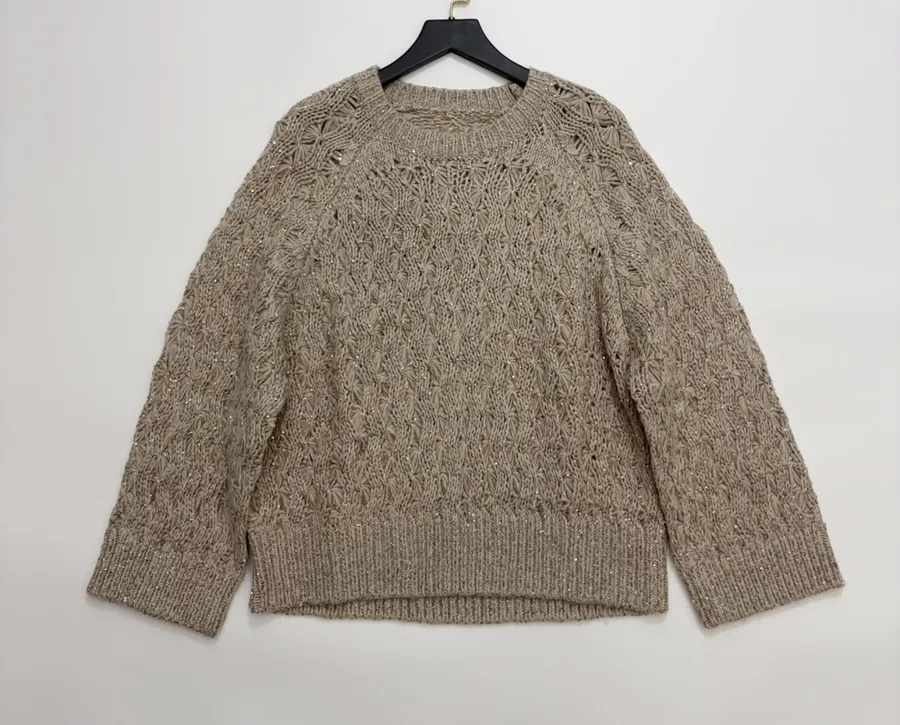
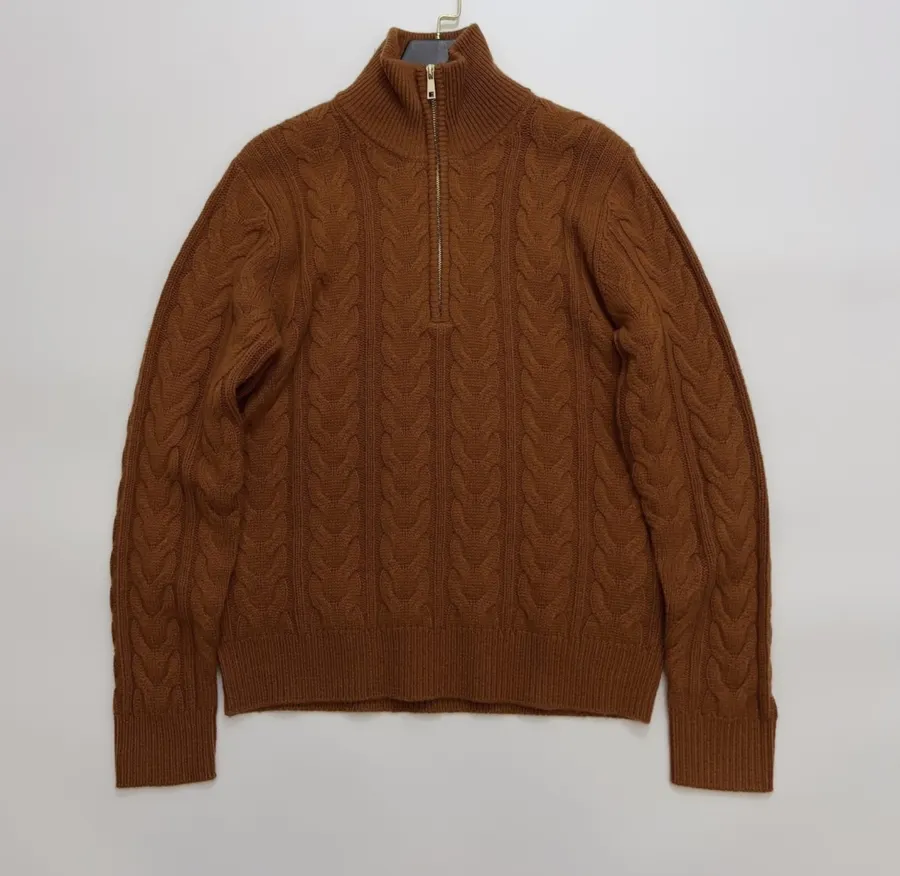
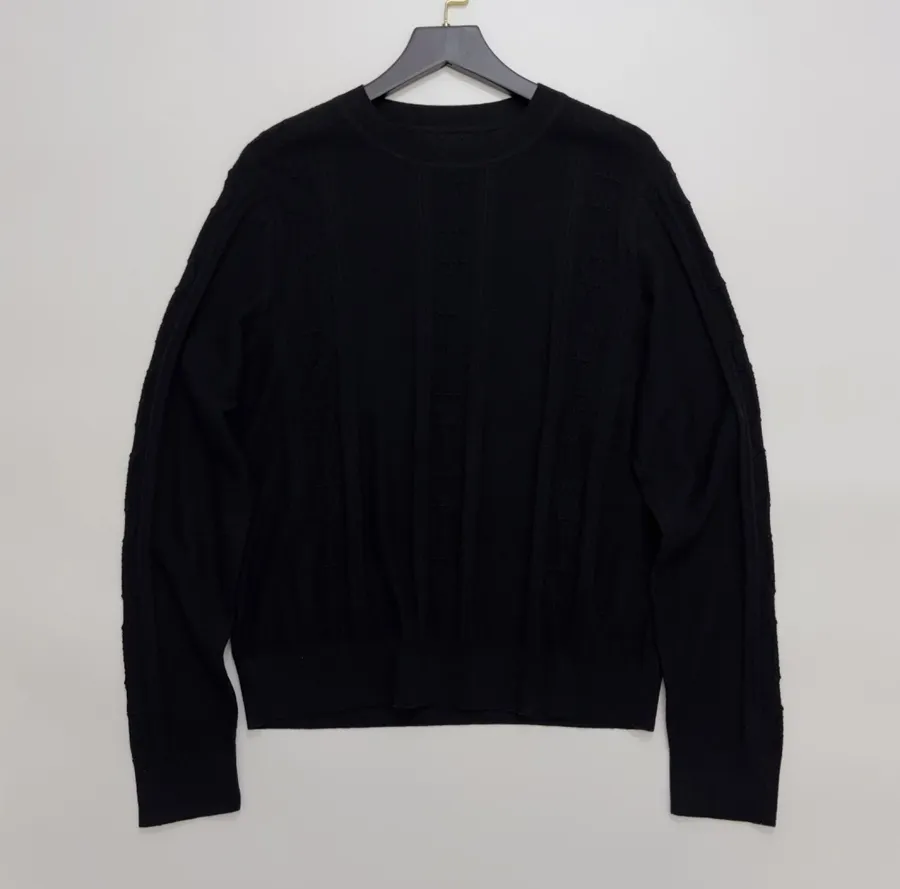
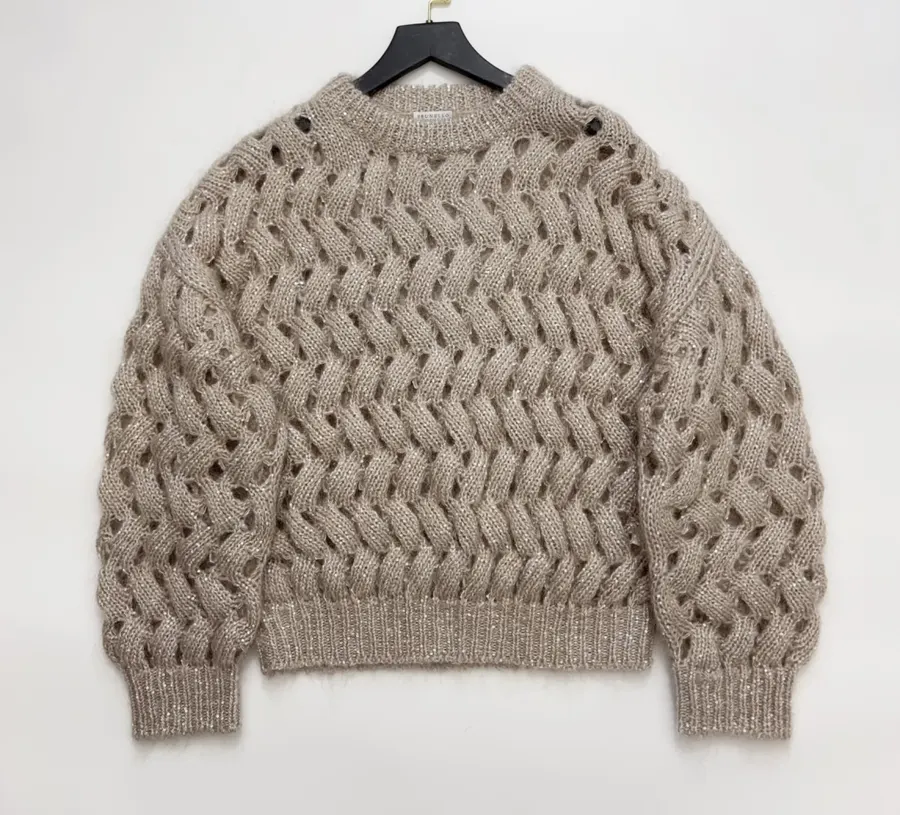
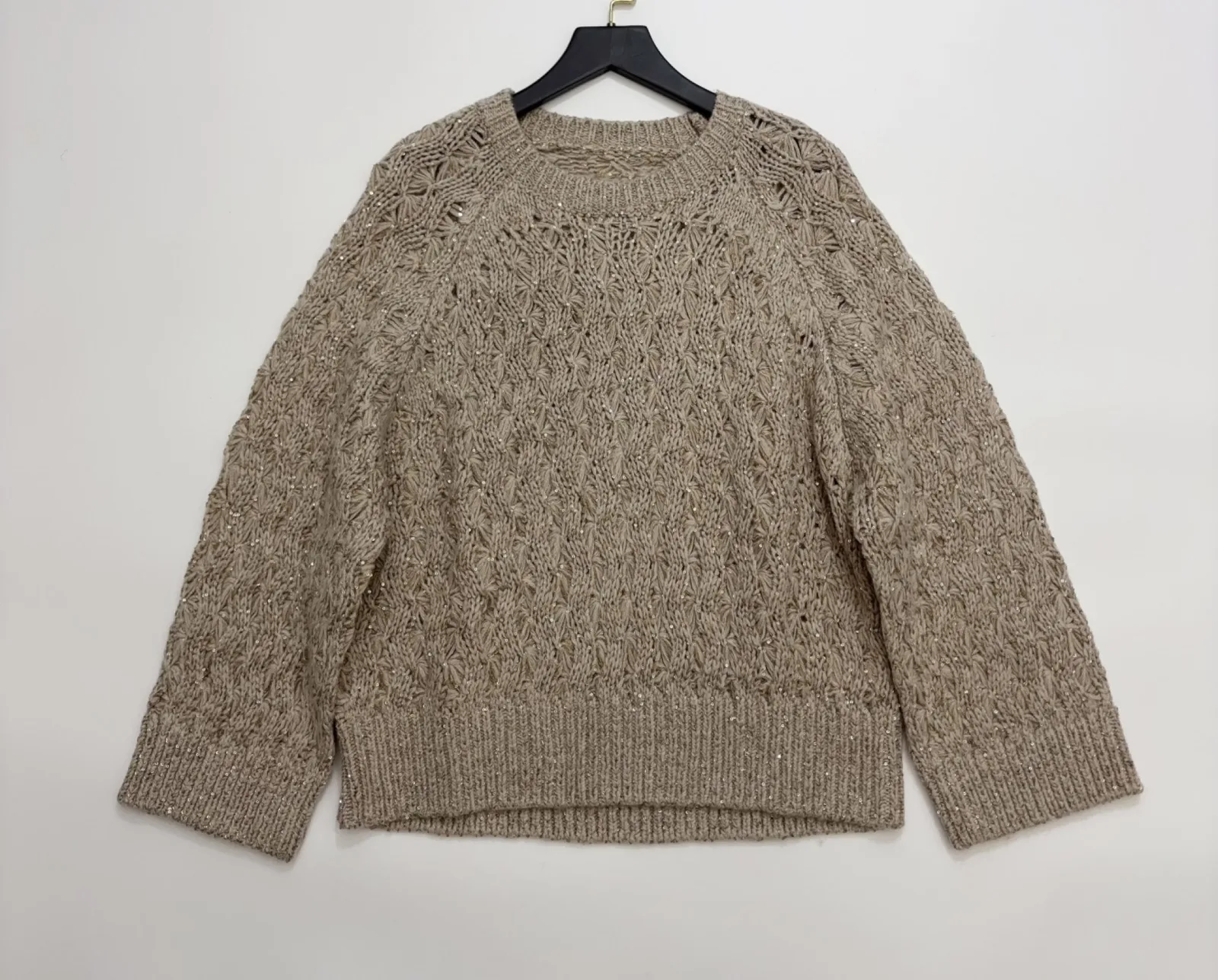
Look closely at the product photographs. A fine, compact knit behaves differently from a loose, open one even when the fibre list is similar. Ribbing may draw a cuff or hem inward. Brushed surfaces can look soft but may require more care around friction. Openwork areas can catch on jewellery or rough bag hardware.
Use the description to identify structure rather than to predict an exact sensation. Ask about garment weight, transparency, lining and stretch if these are not shown. If texture matters to you, a close photograph in natural light or a small swatch is more informative than a general promise that the knit feels luxurious.
Read the care line before deciding how often you will wear it
The FTC Care Labeling Rule requires a regular care method and relevant warnings for covered clothing sold in the United States. Follow the instructions attached to the actual garment. Do not replace them with generic advice for wool, cashmere or any other fibre, because a blend, trim or construction can change the suitable method.
Think about your own routine. A knit that needs professional cleaning may still suit an occasional outfit, while a frequently worn layer may need a care method you can manage easily. Check drying and ironing directions as well as washing. Store the care information with your order record in case the printed label becomes difficult to read later.
Ask questions that produce verifiable answers
When information is missing, ask for the complete fibre-content line, the care line and a photograph of both labels. For a colour or size variant, confirm that the label applies to that exact variant. Ask whether the garment is lined and, if so, request the lining composition separately.
A useful product record is simple: product name, colour, size, fibre percentages, care instructions and the date you checked them. This does not guarantee how a knit will age, but it gives you something concrete to compare and helps you spot a listing that has been updated without its details being carried across.