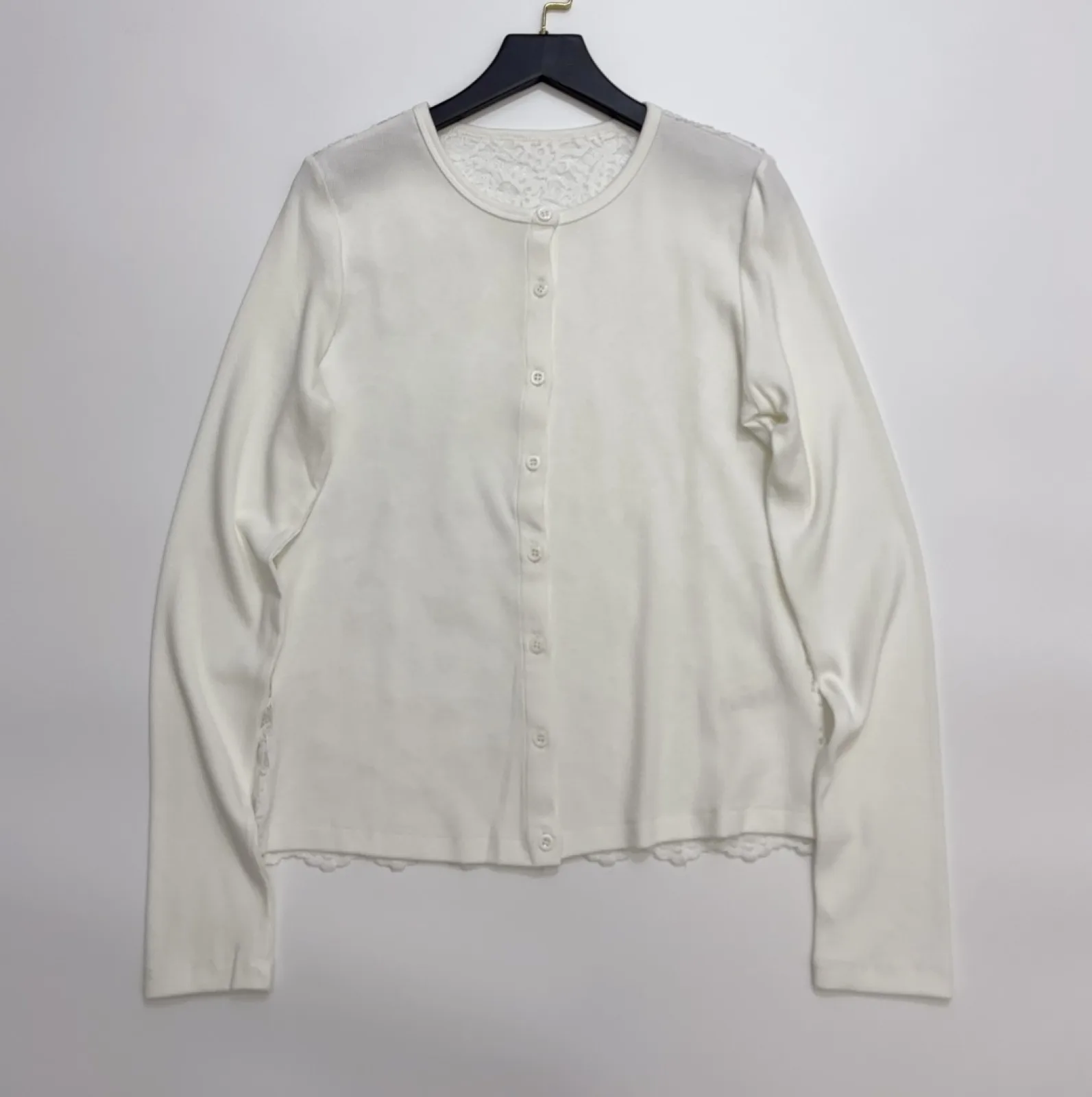
How should a cardigan fit? Check the shoulders, sleeves and layers
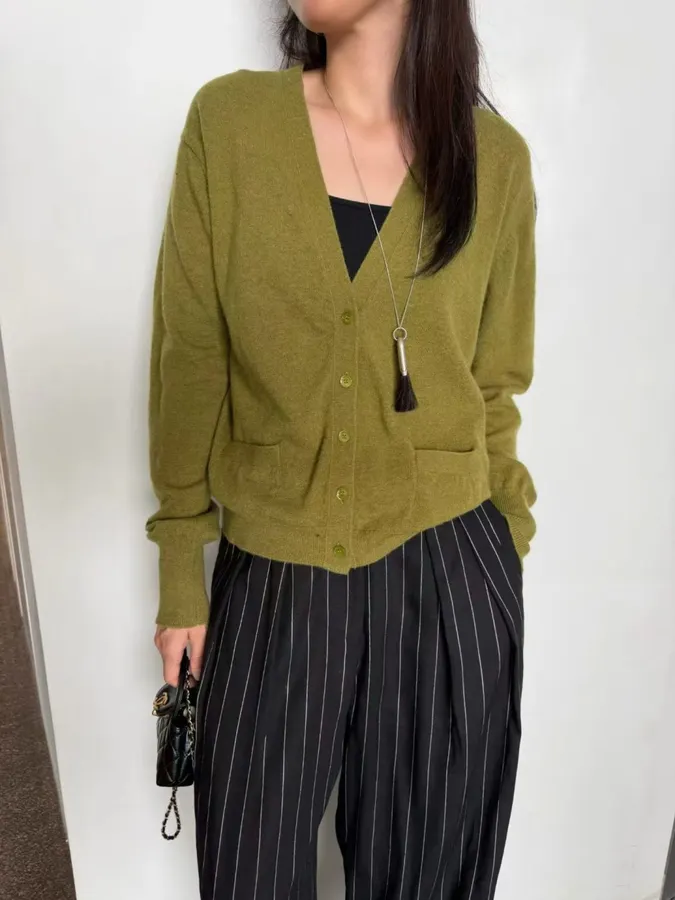
A cardigan does not have one correct fit. A fine knit worn over a vest can sit close to the body, while a heavier cardigan may need enough room for a shirt underneath. The useful question is not whether it looks fitted or oversized on the product page. It is whether the shape still works when you wear it the way you planned.
Before looking at the size letter, decide what the cardigan is for. Buttoned as a top, open over a dress and layered like a jacket each place different demands on the shoulders, sleeves and front opening.
Start with the layer you will actually wear
Try your reference cardigan with the same kind of layer you expect to use: a camisole, a cotton shirt or another fine knit. A cardigan that feels easy over bare arms may pull at the upper sleeve once a shirt is added. The opposite can happen too. Extra room intended for layers may feel shapeless when the cardigan is worn alone.
If you are shopping online, measure a cardigan that already works for that purpose. Fasten it, lay it flat without stretching the knit and note the chest width, body length and sleeve length. Use those figures beside the product's own measuring diagram. Knits can relax during wear, so a comparison with a familiar garment is more useful than treating a body measurement as an exact garment measurement.
Read the shoulder and sleeve together
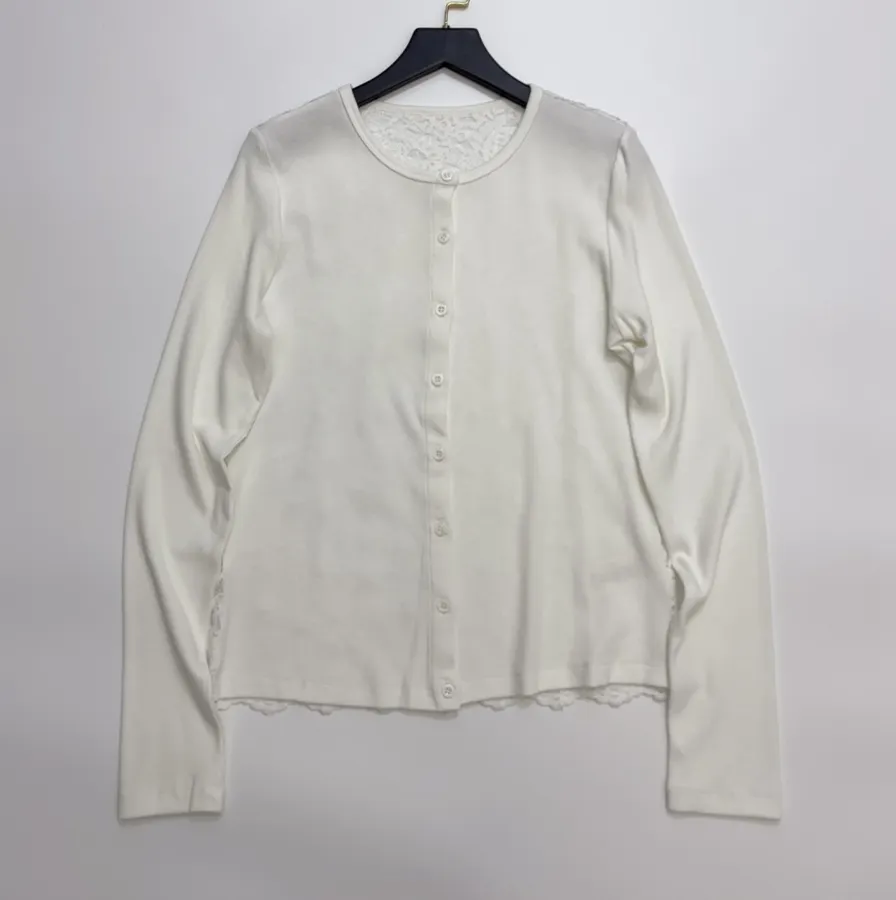
On a set-in sleeve, the shoulder seam usually sits near the point where your shoulder turns into your upper arm. If it lands much higher, the armhole may feel tight when you reach forward. If it drops lower, the cardigan will look more relaxed and the sleeve may also finish farther down the hand. A dropped shoulder is often a design choice, so compare it with the product photographs rather than correcting it automatically.
Bend both elbows and reach for something in front of you. The cuff should stay where you can use your hands, and the sleeve should not pull sharply across the upper arm. Ribbed cuffs can be pushed back; wide or embellished cuffs are less adjustable. Check that detail before accepting sleeves that look long in a still photograph.
Button the front even if you plan to wear it open
Fastening the cardigan reveals information that an open-front photograph can hide. The button band should lie in the way the design intends. Strong horizontal pulling between buttons usually means the front is under tension. Deep vertical folds may mean there is more room than you want, although soft drape and wrap shapes naturally create folds.
Look at the neckline as well. A crew neck should not press uncomfortably against the throat, and a deep V should stay where you are happy for the layer underneath to show. Sit down while it is buttoned. The lower buttons and waistband often feel different when the body bends.
Use length to balance the clothes you already own
Body length changes where the cardigan meets a waistband, skirt or dress. A cropped shape can finish neatly at a higher waist, but it may expose a shirt hem when you reach up. A longer cardigan can cover the top of trousers and work like a light outer layer, though it may bunch under a short coat.
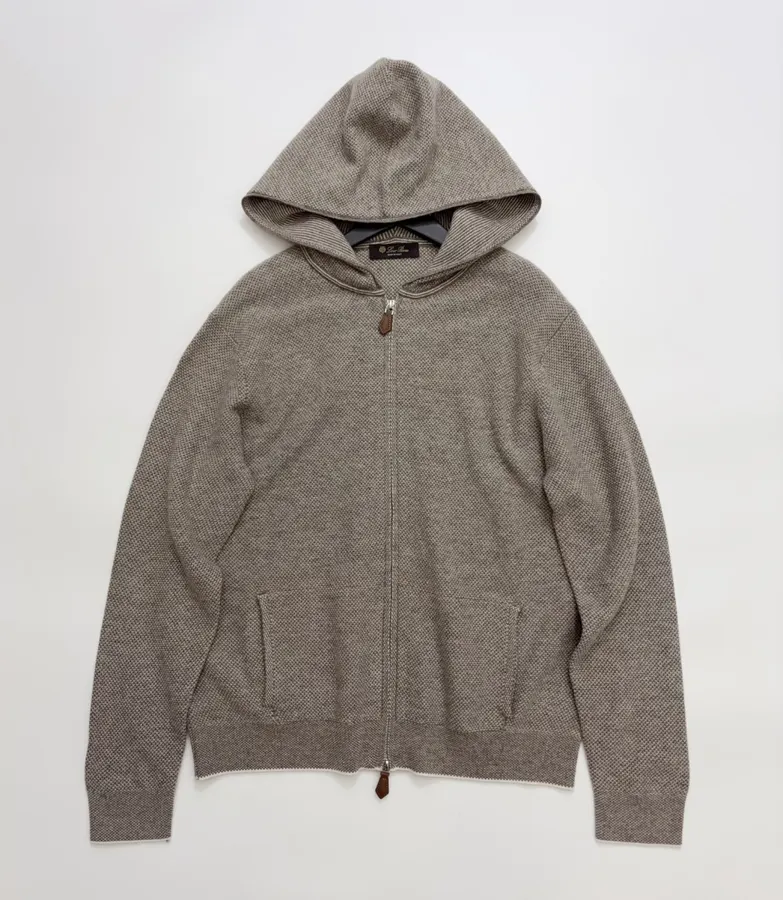
Pay attention to the hem construction. A firm ribbed band draws the lower edge inward; a straight or split hem falls more freely. Measure from the same point used on the size chart and compare the number with your own garment. Product names such as cropped or longline are relative, not a measurement.
Make the final check in motion
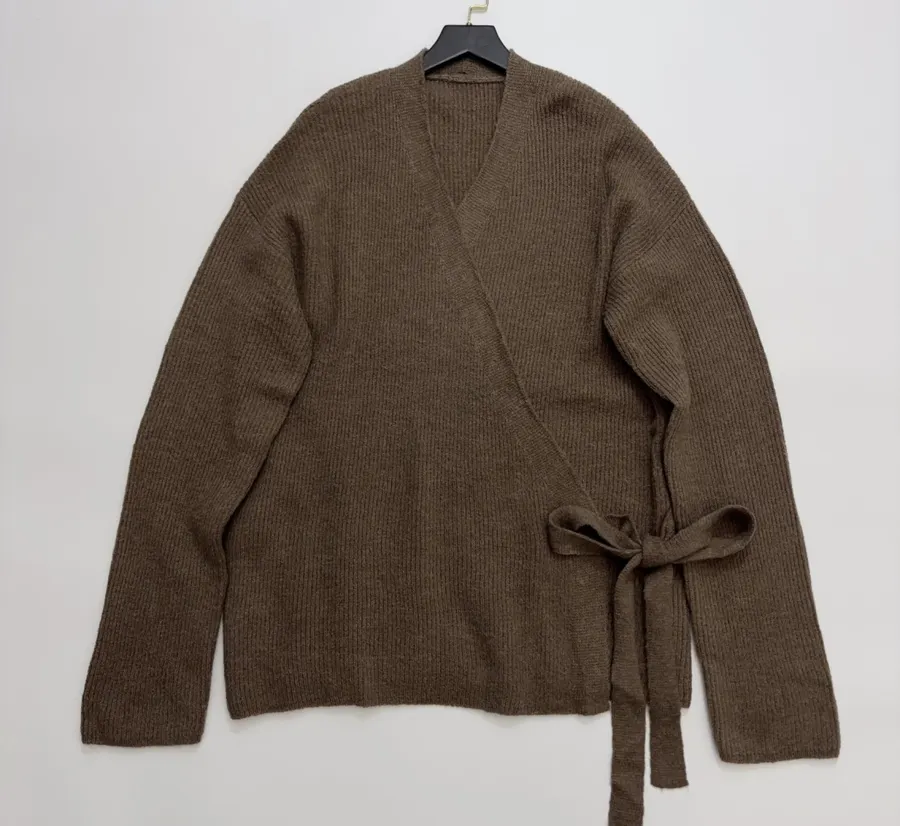
Wear the cardigan for a few minutes before removing tags. Fasten it, sit, raise your arms and carry a bag on your shoulder. Check whether the front stays comfortable, the underarm twists, or the sleeves slide into your hands. For a wrap cardigan, tie it twice and make sure the waist position is stable without pulling the fabric tightly.
Keep the size that supports the intended styling and ordinary movement. Going up a size may add chest room, but it can also change shoulder position and sleeve length. Compare those changes one by one instead of assuming a larger size will solve every fit issue.