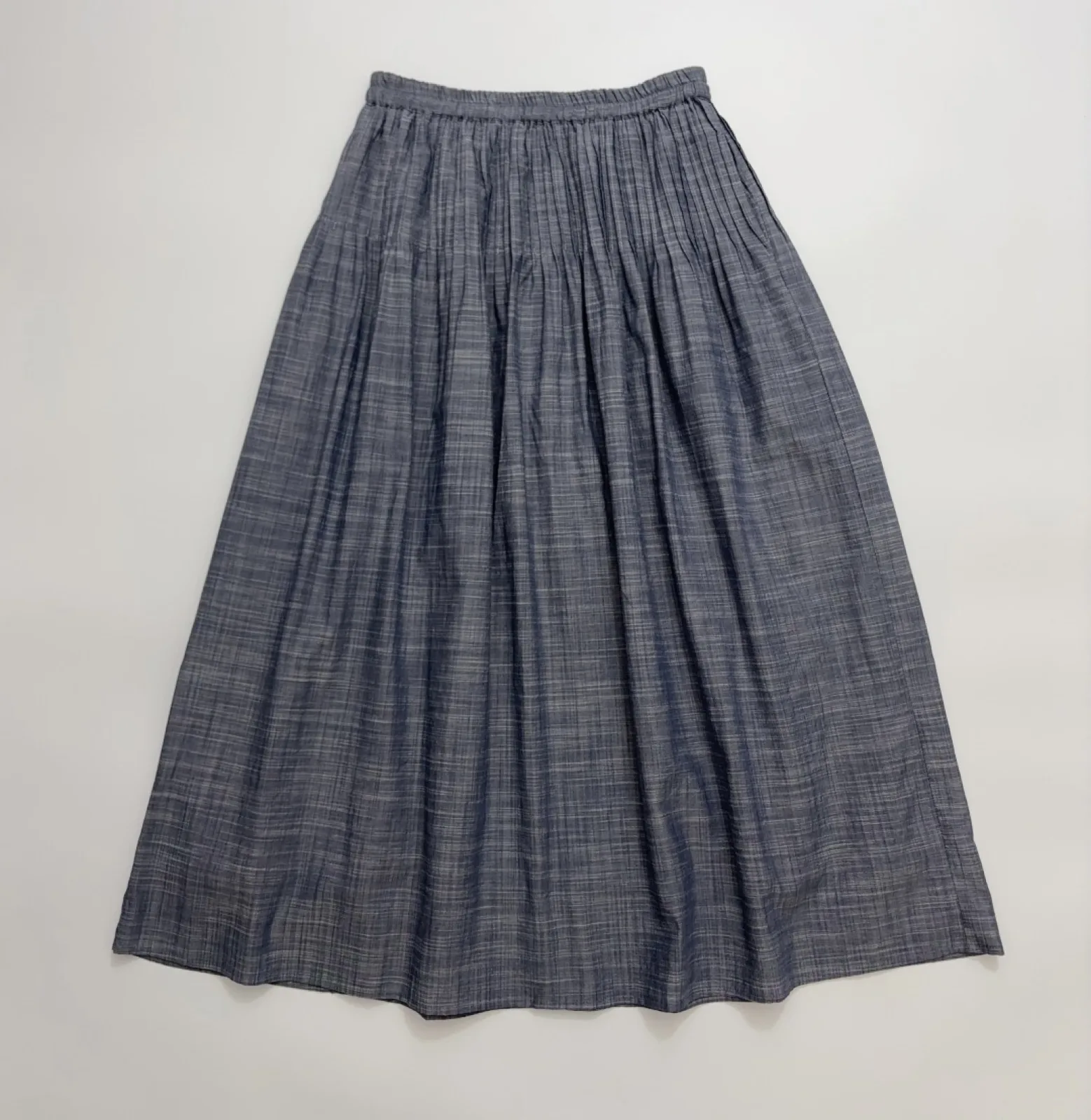
Pleated, A-line, straight or full: how to choose a skirt silhouette
Skirt names overlap. One shop may call a softly flared skirt A-line, while another describes a similar shape as full. Pleated skirts can fall straight from the waistband or open widely below it. The label is a starting point; the construction shows what the skirt will actually do.
Look from the waistband down. Notice where volume begins, whether the hip is shaped closely and how the hem moves. Those details are more useful than trying to match a silhouette to a rule about body shape.
Begin at the waistband
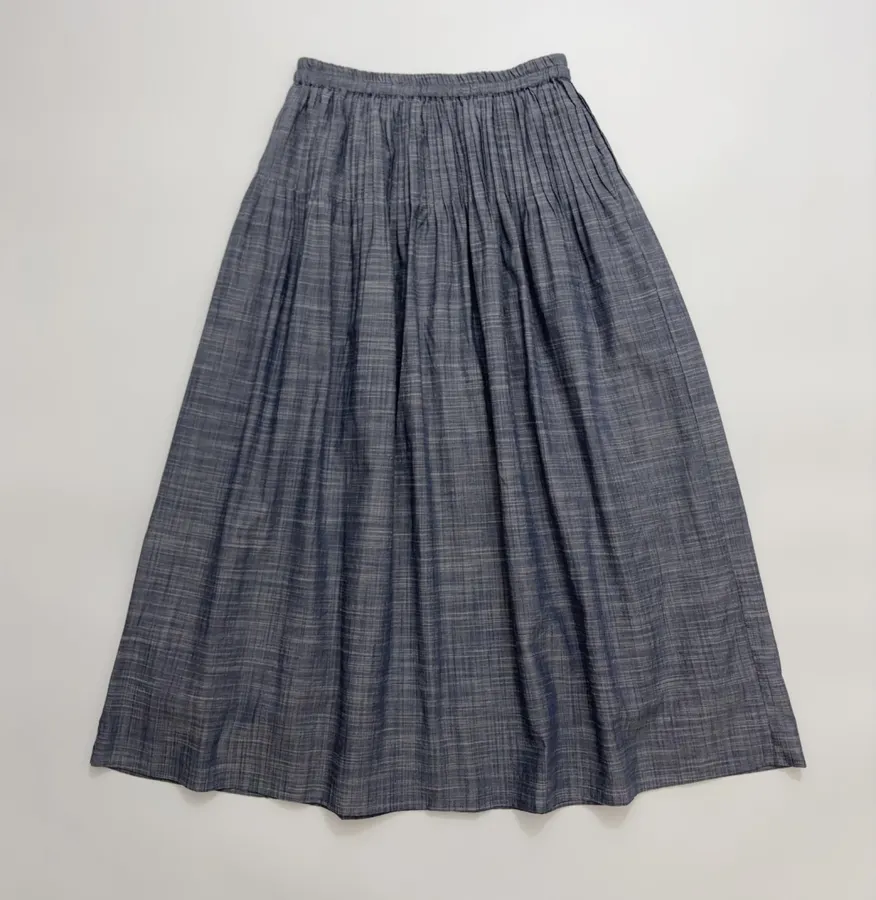
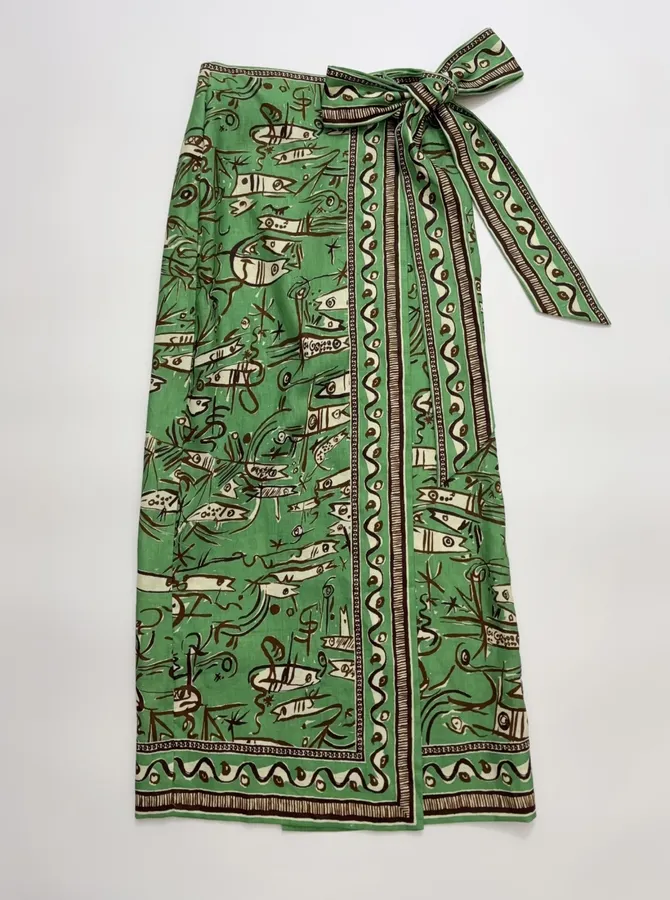
A fixed waistband gives a defined starting point. An elastic waistband can gather the fabric and change how much volume appears at the waist. A wrap or tie waist adjusts differently and may create overlap at the front. Check whether the top is intended to sit at the natural waist, lower on the hips or at an adjustable position.
Think about the tops you already own. If you like to tuck in a shirt, leave room at the waistband for that layer and check whether gathers become bulky. If tops are usually worn outside, compare their hem with the skirt's waistband and widest point. A few centimetres can change where the outfit looks divided.
See where the skirt gains volume
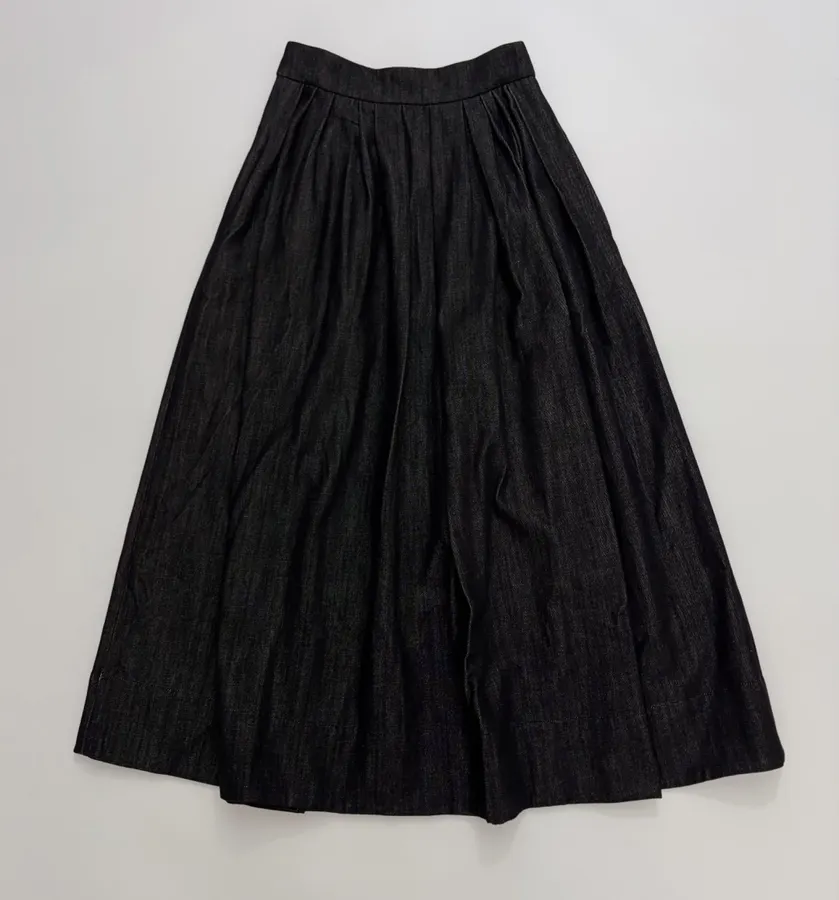
An A-line skirt usually widens gradually from the upper section. A straight skirt keeps a more similar width through the body and may use a slit for movement. A full skirt carries more fabric around the hem. These descriptions are useful only when paired with front, side and back images.
Check darts, panels and gathers. Darts shape fabric around the waist and hip; vertical panels can control a flare; gathers add volume directly where they are sewn. If the product page gives a hip measurement, compare it with a skirt of similar construction rather than with a stretchy pencil skirt.
Pleats change when you sit and walk
Pleats may be stitched down near the waist, released immediately from the waistband or set into only part of the skirt. Stitched-down pleats keep the upper section flatter. Released pleats open sooner and can create more movement around the hip. Accordion pleats spread and close as you move, so the still photograph shows only one moment.
Sit in your reference skirt and watch what happens at the front. Pleats naturally open when the body bends; that alone is not a fit problem. The useful checks are whether the waistband remains comfortable, the folds return when you stand and the lining gives enough room for your stride.
Use fabric and lining to understand the fall
A crisp fabric holds folds and stands farther from the body. A fluid fabric follows movement and may fall closer. A crinkled surface creates its own texture, while a lining can add opacity and change how the outer layer slides. Composition alone does not fully predict this, so use close photographs and garment weight when available.
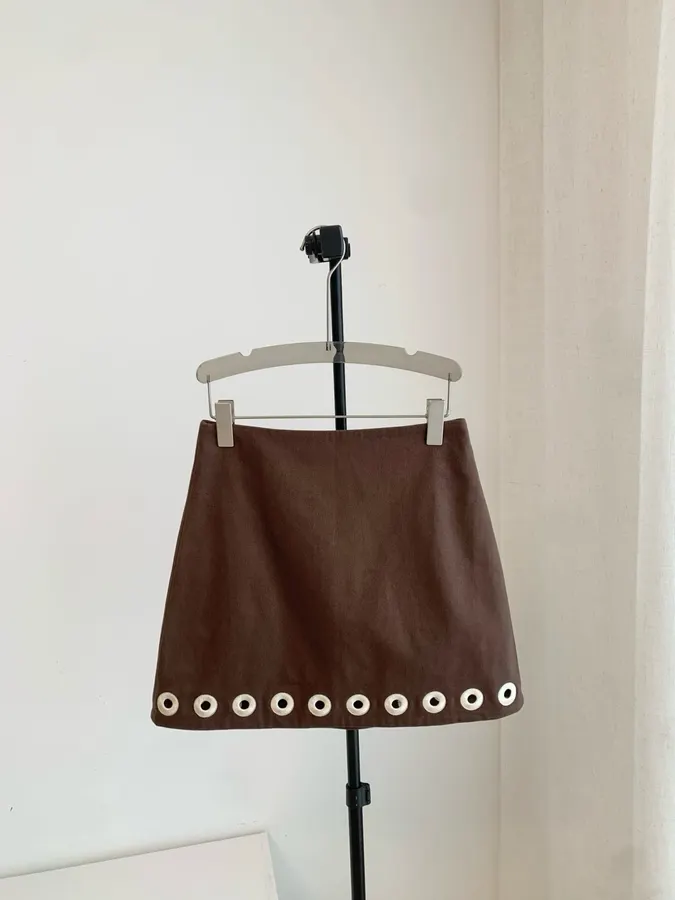
For light colours or openwork details, check where the lining ends. A shorter lining changes how the lower section looks in strong light. Ask whether the lining is attached, whether it stretches and whether the care instructions are the same for both layers.
Compare the skirt with a real outfit before deciding
Try the skirt with one tucked top, one untucked top and the shoes you expect to wear. Walk, sit and climb stairs. Check pocket placement, slit height and whether the hem catches around your legs. A skirt can look balanced from the front yet feel awkward in the movement your day requires.
When ordering online, record waist width, hip measurement, length and hem width where available. Add one note about the volume you prefer: close through the hip, gradual flare or movement from the waist. That note will be more useful for the next purchase than the style name by itself.