How to Read Material Information
Choosing a garment often begins with a photograph, but the most useful details appear when you look a little closer. Texture suggests how a fabric may feel, cut shows how it sits away from the body and the care label explains how to look after it once it is yours.
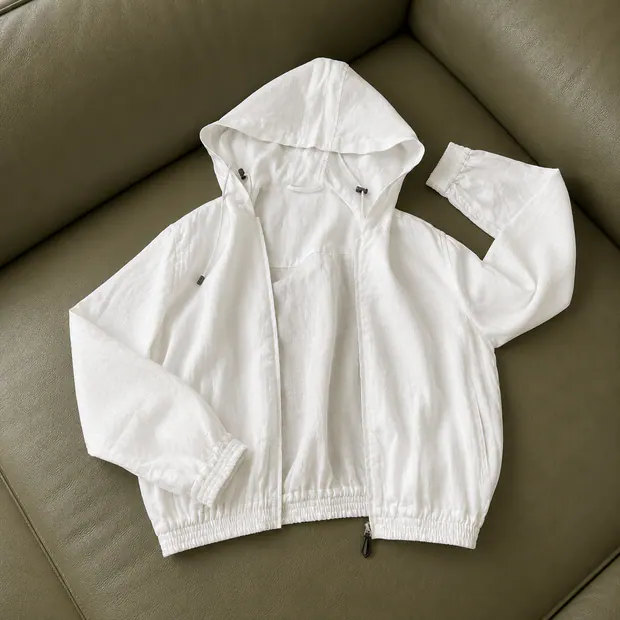
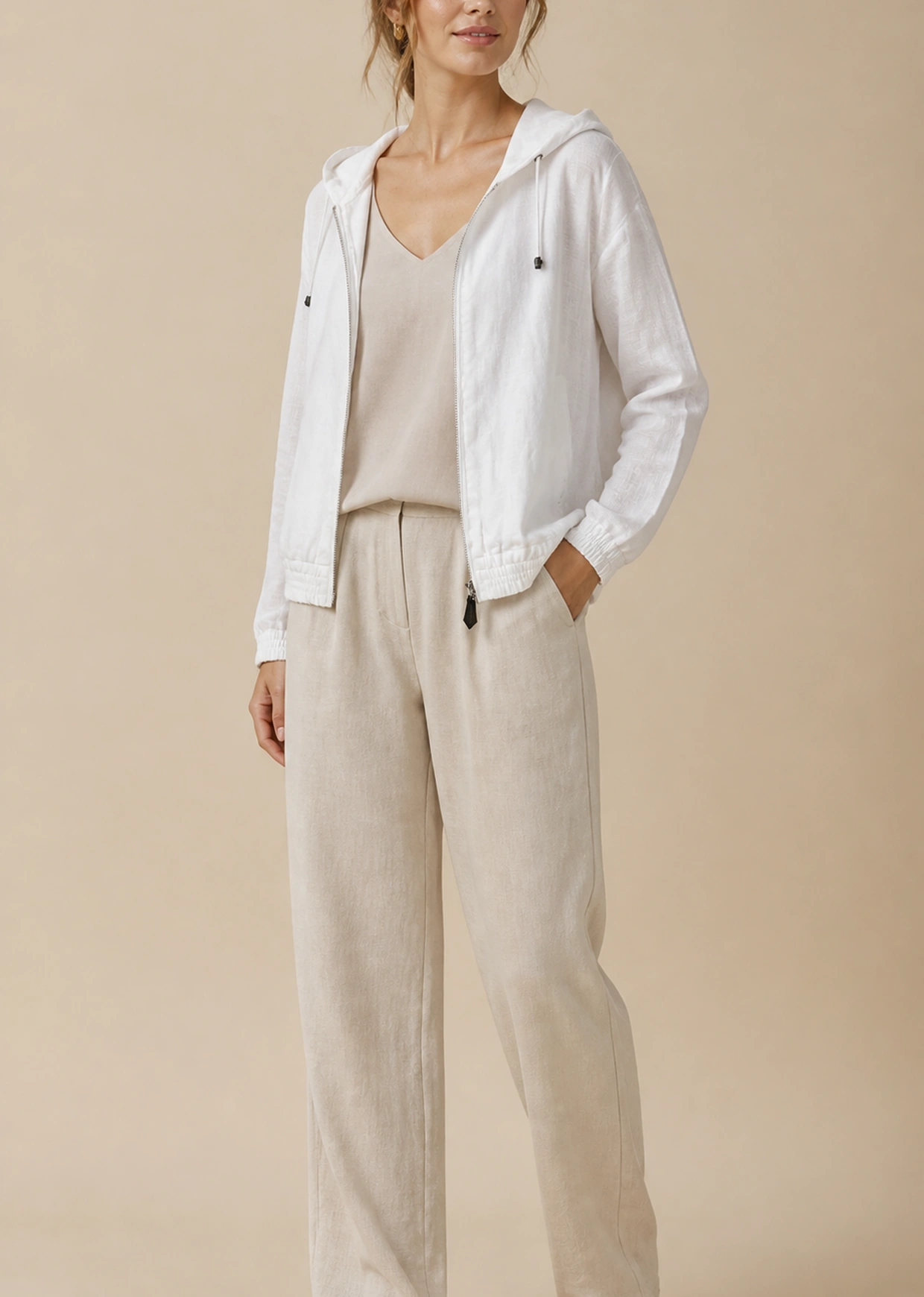
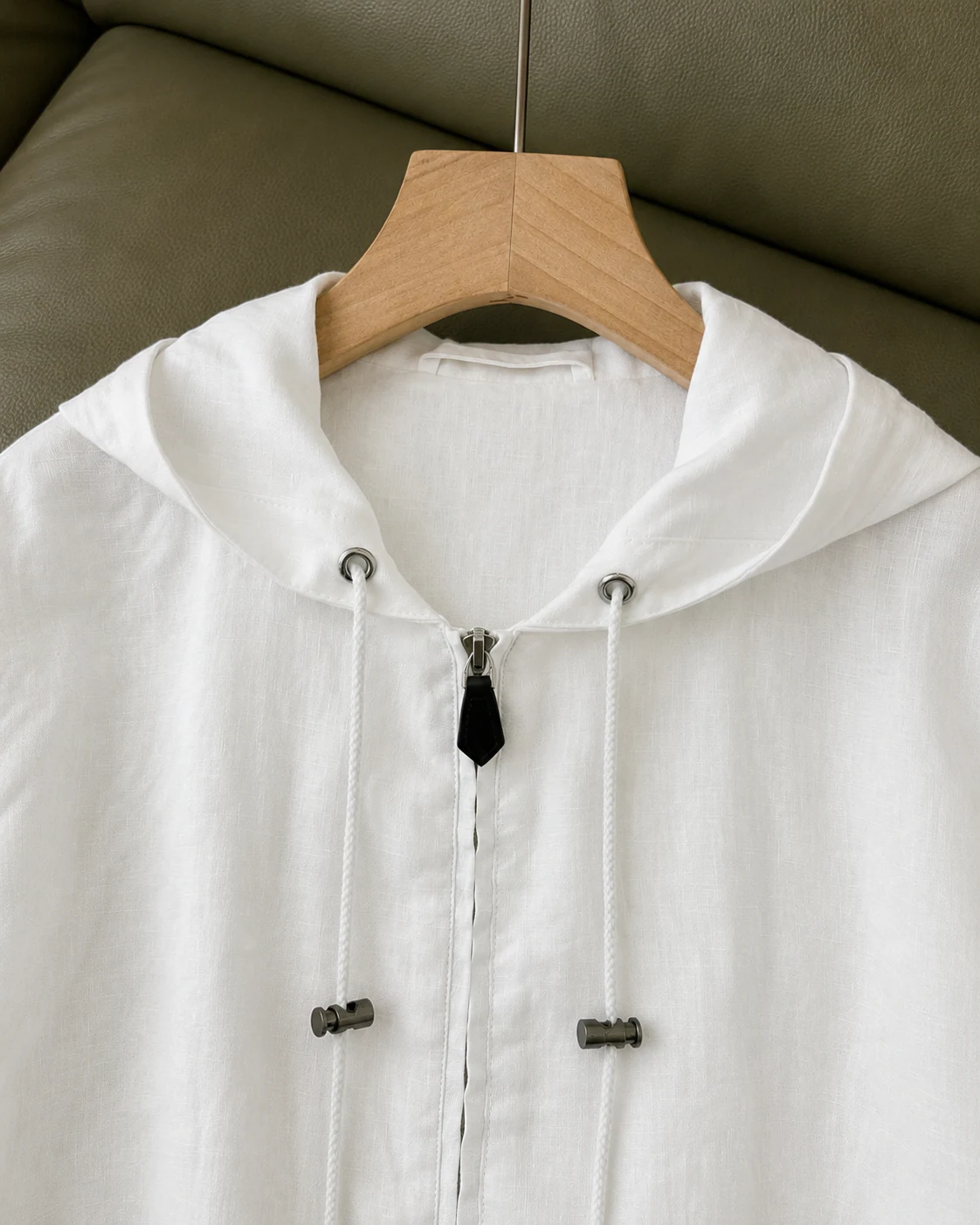
This hooded linen-blend jacket brings those details together in an easy shape. The hood and drawcord keep the neckline relaxed, while the zip front makes it simple to wear open or closed as the temperature changes.
Look at material and construction as one conversation. A light fabric feels different when it is cut close to the body than when it has room to move. Here, the relaxed body and practical hood make the surface feel casual and suited to layering.
Before the first wash, read the garment label from beginning to end. Keeping that small routine makes care simpler and helps the jacket retain the shape you liked when you first tried it on.
Read Material and Shape Together
A material name is only the beginning. The hood, zip, body width and sleeve shape decide how that fabric feels in real life.
On this jacket, a relaxed cut gives the linen-blend surface room to fall naturally. The hood adds softness around the neckline, and the zip lets the wearer adjust the front without changing the easy silhouette.
That is the useful question when shopping: not only what the garment is made from, but how the material and cut behave together.
The Care Label Is Part of the Design
Care instructions are easiest to follow before a garment needs attention. Take a moment to notice the washing, drying and ironing symbols when the jacket is new.
Between cleans, air the jacket and smooth the hood and front by hand. Light daily care keeps the shape fresh without making ownership feel demanding.
A familiar routine turns the label from a list of symbols into a simple guide for wearing the piece well.