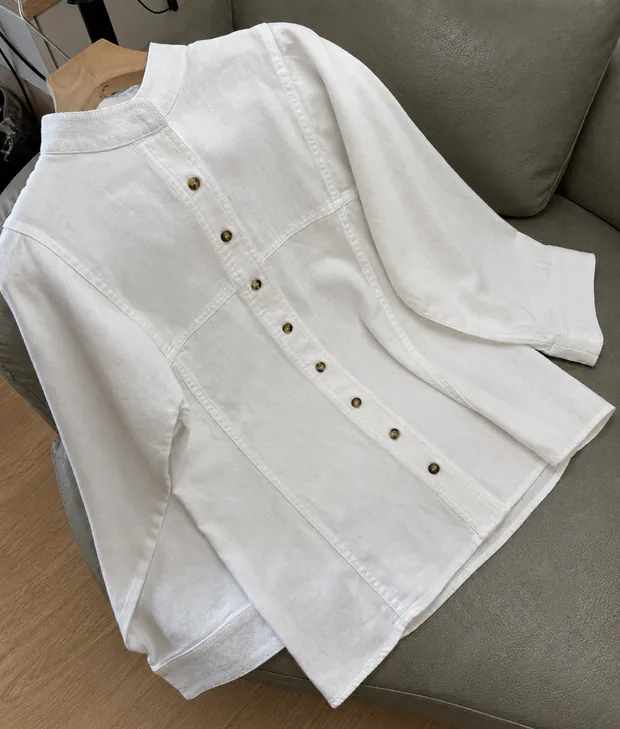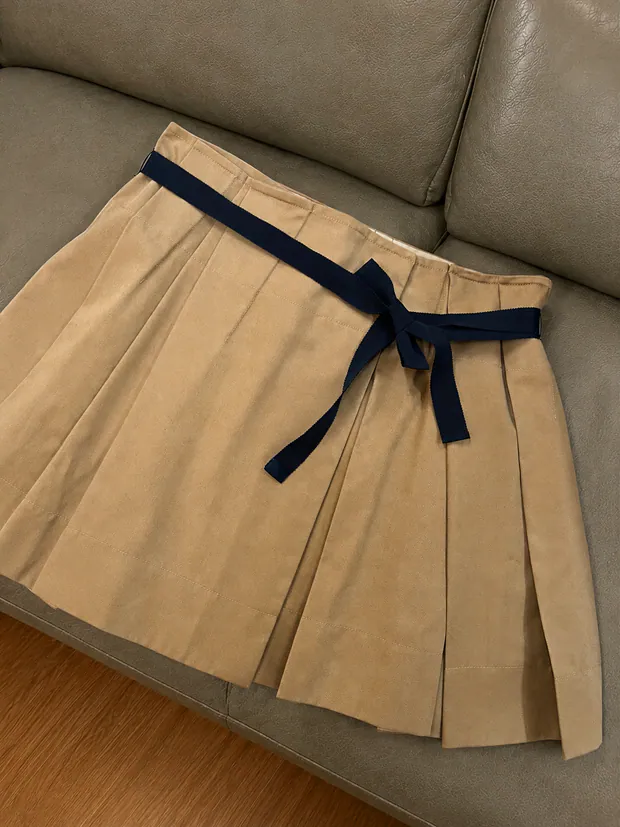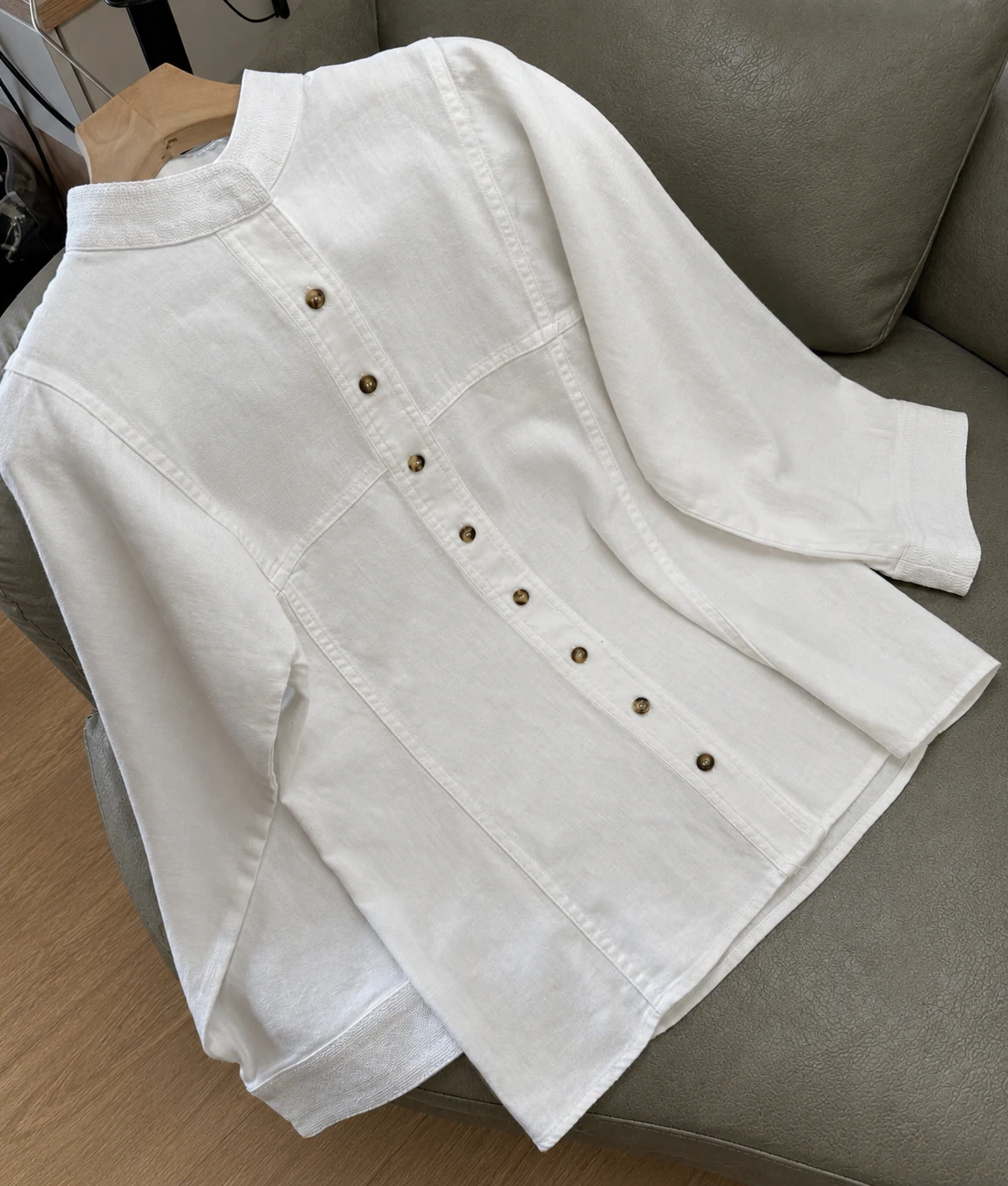
Buying clothes online: measure a garment that fits you well
Online sizing can be confusing: you usually wear a medium, but this medium feels small, while another similar-looking piece is too loose. Letters and numbers are labels. The actual measurements depend on the brand, style and size chart.
A practical starting point is a garment you have already worn and find comfortable. Measure it and compare it with the piece you want to buy. Use a similar type of garment: a shirt for a shirt, a jacket for a jacket. The measurements of a close-fitting stretch T-shirt are not a good direct guide to the size of a different outer layer.
First, check whether the chart measures the body or the garment
Body measurements are taken around your body. Garment measurements describe the clothing itself. They cannot be compared as though they were the same thing.
For example, measuring around your chest gives a body circumference. Laying a buttoned shirt flat and measuring across its front usually gives a garment width at a particular point. Shops may use chest width and chest circumference differently, so read the measuring diagram as well as the heading.
If a chart says only "chest" without explaining whether it refers to the body or the garment, ask before choosing. A list of S, M and L, or a series of numbers, should not be converted to another country's sizing without a stated conversion.
Use a tape measure and lay the garment flat
Place your reference garment on a flat table or floor, fasten its buttons or zip, and gently smooth natural folds without stretching the fabric. Record everything in the same unit; do not mix centimetres and inches in your notes.
Match the measuring points shown by the seller. If chest width is measured at the underarms, use that position too. If length starts where the shoulder meets the neck, do not compare it with a measurement taken from the centre back of the collar. Different starting points can give different results.
When there is no diagram, photograph how you measured your garment and ask the seller to confirm that you are comparing the same points.
For tops, begin with chest width, shoulder width and length
With the garment lying naturally, measure chest width from one side to the other at the agreed position. For an ordinary symmetrical garment, doubling a flat width can give a rough circumference at that point, but this is not a universal conversion for every cut. Comparing flat widths taken at the same position is clearer.
On a conventional set-in-sleeve top with clear shoulder seams, measure across the back between the corresponding points where each shoulder meets its sleeve. Dropped shoulders, raglan sleeves and other constructions may use different measurements. Follow the product diagram, and ask where the sleeve measurement starts if it is unclear.
Measure length from the specified starting point to the hem. If front and back lengths differ, record them separately. For sleeve length, follow the indicated shoulder or neckline starting point to the cuff rather than comparing numbers taken by different methods.
Put the reference garment on again after measuring it. Alongside the numbers, add a note such as "shoulders feel right", "a little loose through the chest" or "sleeves slightly long". Those observations make the measurements easier to use next time.
For skirts and dresses, pay attention to the waist position
For a skirt, check the width of the waistband lying naturally flat, then measure length using the seller's method. You can record an elastic waist at rest, but do not treat the furthest you can stretch it as a comfortable wearing measurement.
A fixed waistband, elastic waist and adjustable waist work differently. The same listed waist measurement may not feel the same on each. Wrap styles and asymmetrical garments particularly need their own measuring diagram.
With a dress, consider where the waistline falls as well as the chest. The waist shown in a photograph may sit higher or lower on you. If the skirt fits close around the hips, check the garment measurement there too. A suitable chest measurement does not remove the need for room to sit and walk.
Between two sizes, consider how you will wear the piece
If you plan to put a shirt or knit under a jacket, try your reference jacket with that usual layer. A size that feels right over a thin T-shirt may feel different with more clothing underneath.
Do not automatically go up a size whenever you are between two options. More room in the chest may come with changes to shoulder width, sleeve length and body length. Identify the areas that matter most to you, compare each measurement and ask how the neighbouring sizes differ.
If actual garment measurements are missing, make the question specific: "What is the underarm width of this size when the front is fastened and it is laid flat?" That is more likely to produce a useful comparison than simply asking whether it will fit you.
Check these details together before ordering
- Make sure the size chart belongs to the style you intend to buy.
- Establish whether the numbers are body measurements, garment circumferences or flat widths.
- Check that the units and measuring points match.
- Consider your usual layers and movements alongside the product's stated stretch and fit information.
When the garment arrives, try it on as permitted by the returns policy, keeping its tags and packaging while you decide. Fasten the front, reach forward, bend your elbows and sit down; walk a little in a skirt or dress. Check the movements you normally make before washing or altering the garment.